
F1 jargon decoded: a beginner's glossary
DRS, undercut, box, dirty air, parc fermé — the essential Formula 1 terms explained in plain English.
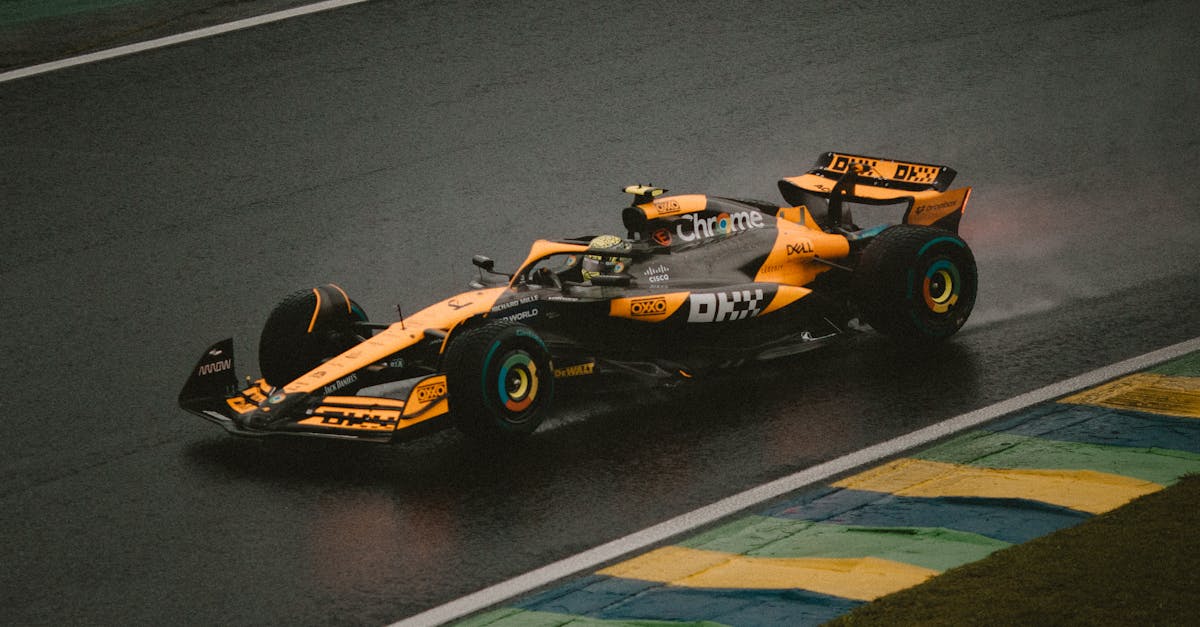
Formula 1 has its own language, and to a newcomer a race broadcast can sound like it is being narrated in code. Engineers talk about deltas and deployment, commentators shout about undercuts and dirty air, and a driver’s radio message can be a single mysterious word. Learn the terms below and you will understand the vast majority of what you hear on any given weekend. This glossary is organised by theme so you can dip in as questions come up, whether you are watching your first practice session or trying to follow the strategy battle in the closing laps of a Grand Prix. If you want the bigger picture first, our guide to how Formula 1 works sets the scene.
Sessions and the weekend
- Free practice (FP1, FP2, FP3) — the untimed sessions where teams test setups, run through tyre compounds and gather data. A standard weekend has three; a sprint weekend has just one.
- Qualifying — the timed session that decides the starting order (the grid). The fastest single lap counts, not an average.
- Q1, Q2, Q3 — the three knockout stages of qualifying. The slowest cars are eliminated after Q1 and again after Q2, leaving the top ten to fight for pole in Q3.
- Pole position — first place on the starting grid, earned by the fastest lap in qualifying. The best track position of all, on the cleaner side of the circuit.
- Grid — the staggered starting positions on the track, set by qualifying (or by the sprint on some weekends).
- Sprint — a short race, run on selected weekends, that awards points to the top finishers. It does not replace the main Grand Prix; it is an extra event.
- Sprint qualifying (Sprint Shootout) — a separate, shortened qualifying session that sets the grid for the sprint race specifically.
- Formation lap — the lap immediately before the start, when cars weave and brake to heat their tyres and brakes, then line up on the grid for the lights.
- Flying lap (hot lap) — a lap driven flat out for time, as opposed to a slower preparation or cool-down lap.
- Out-lap / in-lap — the out-lap is the lap leaving the pits up to speed; the in-lap is the lap on which a driver returns to the pits, often pushing hard to protect track position.
- Parc fermé — literally “closed park”. From the start of qualifying, cars are held under strict conditions and teams cannot make significant setup changes, ensuring the car that qualifies is the car that races.
- 107% rule — in Q1, any driver slower than 107% of the fastest time may be refused entry to the race, though stewards can grant an exception.
- Scrutineering — the technical inspection that checks each car complies with the rules, before and after sessions.
Racing and strategy
- Box / boxing — to come into the pit lane. “Box, box” on team radio means pit now. The term comes from the German “Boxenstopp”, and is used because “box” is far clearer than “pit” over a crackly radio.
- Undercut — pitting for fresh tyres before a rival, then using the extra grip to set fast laps and leapfrog ahead once they stop. Our guide to pit stops and strategy breaks this down in detail.
- Overcut — the opposite of the undercut: staying out longer on older tyres while a rival pits, hoping to bank enough time on a clear track to emerge in front after your own stop.
- Stint — a run of laps on a single set of tyres, between pit stops.
- One-stop / two-stop — the number of planned pit stops in a race. A one-stop trades tyre life for track position; a two-stop is faster on paper but risks getting stuck in traffic.
- Pit window — the range of laps in which stopping makes strategic sense, given tyre wear and the position of rivals.
- Track position — simply being ahead on the road. Because clean air is worth so much, holding track position can beat having fresher tyres.
- Dirty air — the turbulent, disrupted air trailing a car that robs the one behind of downforce, making it harder to follow and overtake through corners.
- Slipstream / tow — the pocket of low-drag air directly behind a car on a straight. Sitting in it lets the following car carry more speed and set up a pass.
- DRS (Drag Reduction System) — the term fans still use out of habit. For over a decade DRS was a movable flap on the rear wing that opened to cut drag and boost straight-line speed when a driver was within one second of the car ahead in a designated zone. For 2026 it has been replaced (see Manual Override below).
- Delta — a target time. A driver “on a delta” is lapping to a required pace, for example the minimum time demanded under a Virtual Safety Car.
- Lock-up — when a driver brakes too hard and a tyre stops rotating and slides, usually flat-spotting the tyre and sending the car wide.
- Dive-bomb (lunge) — an ambitious, late-braking overtaking move up the inside into a corner, often risky and sometimes unwelcome.
- Defensive line — positioning the car to cover the inside of a corner and make it hard for a following driver to pass.
- Backmarker / lapped car — a car near the rear of the field that the leaders catch and pass, putting it a full lap or more behind.
- Marbles — bits of worn rubber that gather off the racing line. Running over them coats the tyres and destroys grip, so drivers avoid the “marbles” when off-line.
The car, aero and chassis
- Monocoque (survival cell) — the ultra-strong carbon-fibre tub at the heart of the car that houses the driver and anchors the main components. It is the core of the crash structure. See our anatomy of an F1 car for a full tour.
- Halo — the titanium hoop above the cockpit that protects the driver’s head from debris and impacts. It has saved lives and is now standard across single-seater racing.
- Downforce — aerodynamic load that presses the car onto the track, adding grip through corners. More downforce means faster corners but a lower top speed.
- Drag — aerodynamic resistance that slows the car on the straights. Teams constantly balance downforce against drag for each circuit.
- Front wing — the multi-element wing at the nose that makes the first, crucial cut through the air and steers airflow around the rest of the car.
- Rear wing — the wing at the back that generates rear downforce and, in 2026, opens to shed drag as part of the active-aero system.
- Beam wing — a lower wing element mounted beneath the main rear wing that helps seal the diffuser and manage the airflow leaving the car.
- Floor — the underside of the car and, in the current era, the single biggest source of downforce.
- Diffuser — the upswept section at the rear of the floor that speeds up and expands airflow beneath the car, sucking it down onto the track.
- Ground effect (venturi) — the principle behind modern floors: shaped channels under the car accelerate airflow to create a low-pressure zone that generates downforce with relatively little drag.
- Ride height — how high the car sits above the track. Running low boosts floor performance but risks bottoming out.
- Plank / skid blocks — a wooden-composite plank under the floor with metal skid blocks. Excessive wear indicates the car ran too low and can bring disqualification.
- Porpoising — a violent up-and-down bouncing on the straights, caused when ground-effect downforce repeatedly stalls and returns. A notorious headache of the current regulations.
- Active aero (X-mode / Z-mode) — the 2026 system in which the front and rear wings adjust between a high-downforce configuration for corners (“Z-mode”) and a low-drag configuration for straights (“X-mode”), replacing the old fixed-wing-plus-DRS approach.
- Bargeboards — intricate aero vanes once mounted along the sides of the car to condition airflow. They were largely banned when the current simpler-bodywork rules arrived, but the term still crops up when older cars are discussed.
Power unit and ERS
- Power unit (PU) — the complete propulsion system: not just an engine, but a hybrid combining a combustion engine with electrical energy recovery.
- ICE (internal combustion engine) — the 1.6-litre turbocharged V6 petrol engine at the core of the power unit.
- Turbo (turbocharger) — a turbine driven by exhaust gases that compresses incoming air, letting the engine make far more power from a small capacity.
- Hybrid — the combination of combustion and electrical power. In 2026 the electrical side is far more significant than before, providing close to half of the car’s total power.
- MGU-K (Motor Generator Unit – Kinetic) — the electrical unit that recovers energy under braking and stores it, then deploys it as extra power for acceleration. In 2026 it is the sole energy-recovery unit; the old exhaust-driven MGU-H no longer exists.
- ERS (Energy Recovery System) — the overall system that harvests, stores and redeploys electrical energy around the lap.
- Energy store (battery) — the battery pack that holds recovered energy until the driver or software deploys it.
- Harvesting / deployment — harvesting is collecting energy (mainly under braking); deployment is spending it for a power boost. Managing the balance over a lap is a key part of modern driving.
- Manual Override — the 2026 overtaking aid that replaced DRS. When a chasing driver is close enough to the car ahead, they can call on a substantial extra burst of electrical power to help complete a pass, rather than opening a wing flap.
- Engine modes — software settings that trade power against fuel and component life. Radio calls to change mode are common, though coded mode names are used to keep rivals guessing.
- Sustainable fuel — from 2026 the cars run on 100% sustainable fuel, made from non-fossil sources, with no loss of the performance fans expect.
Tyres
- Slick — a smooth, treadless dry-weather tyre that maximises the rubber touching the road. Pirelli is F1’s sole tyre supplier. There is more in our F1 tyres explained guide.
- Compound — the rubber recipe of a tyre. Pirelli’s dry range runs from C1 (the hardest and most durable) to C6 (the softest and grippiest but shortest-lived).
- Soft / medium / hard — the three dry compounds chosen for a given weekend, drawn from the C1–C6 range. Softer tyres are faster but wear quicker; harder tyres last longer but offer less grip.
- Intermediate — a treaded tyre for a damp or drying track, clearing modest amounts of water.
- Wet (full wet) — the most heavily treaded tyre, for standing water and heavy rain, designed to resist aquaplaning.
- Degradation (“deg”) — the loss of tyre performance over a stint, whether from wear or overheating. High deg forces earlier or extra pit stops.
- Graining — a surface tearing where rubber rolls up on itself, temporarily reducing grip, often on a cold track or a new tyre pushed too hard.
- Blistering — bubbling and chunking of the tyre surface caused by overheating from the inside, leaving the rubber degraded.
- Thermal degradation — performance loss caused by the tyre running hotter than its ideal temperature, as opposed to simple mechanical wear.
- Operating window — the temperature range in which a tyre works best. Below it the tyre is cold and slippery; above it, it overheats and drops off.
- Warm-up — getting tyres into their operating window. Some compounds and cars struggle to warm tyres on an out-lap, hurting qualifying.
- Flat spot — a worn patch on a tyre caused by a lock-up, which makes the car vibrate and can force a pit stop.
Flags, safety and officials
- Chequered flag — the black-and-white flag that signals the end of a session or race.
- Yellow flag — danger ahead; drivers must slow and cannot overtake. Double waved yellows mean serious danger and a readiness to stop.
- Green flag — the track is clear and racing resumes.
- Red flag — the session is stopped, usually for a serious incident or unsafe conditions. Cars return to the pits.
- Blue flag — shown to a slower car about to be lapped, instructing it to let the faster car through.
- White flag — warns of a slow-moving vehicle on track, such as a recovering car.
- Black flag — orders a driver to return to the pits, typically because they are disqualified.
- Black-and-orange flag — the “meatball” flag, shown with a car number to order a driver in to fix a dangerous mechanical problem, such as loose bodywork.
- Safety Car — a real car deployed to lead and slow the field behind it after an incident, bunching everyone up while marshals work.
- Virtual Safety Car (VSC) — a slowdown enforced by delta times rather than a physical car, keeping gaps roughly constant without bunching the field.
- Stewards — the officials who judge incidents and rule on penalties during and after a session.
- Race director — the official responsible for running the event, including deploying the safety car and starting or stopping the race.
- Penalty — a sanction for a rule breach. Common types include time penalties (added to a driver’s race time), grid penalties (dropping places at the next start), drive-through penalties (driving through the pit lane without stopping) and stop-go penalties (stopping in the box for a set time with no work allowed).
- Track limits — the white lines defining the edge of the circuit. Running all four wheels beyond them can delete a lap time or draw a penalty.
- Unsafe release — letting a car out of its pit box into the path of another, an error that earns the team a penalty.
Team radio and slang
- “Box, box” — the instruction to pit this lap. Said twice for clarity over the radio.
- “Plan B” (or C, D…) — a switch to a pre-agreed alternative strategy without spelling out the details on air, so rivals cannot react.
- Coded pace calls — messages like “we’re racing the car behind” or numbered engine modes, used to convey strategy while keeping specifics from rivals listening in.
- DNF — Did Not Finish; a driver who retired from the race, usually through a crash or mechanical failure.
- DNS — Did Not Start; entered but never took the start.
- DSQ (disqualified) — excluded from the results, for example after a technical infringement found in scrutineering.
- Fastest lap — the quickest single lap of the race. It carries a bonus point if the driver finishes inside the top ten.
- Silly season — the period, often mid-year onwards, of driver-transfer rumours and contract speculation before line-ups are confirmed.
- Gardening leave — the enforced time off a team member sits out when moving between teams, to stop them carrying fresh secrets to a rival.
- Purple / green sectors — timing-screen colours: purple marks the fastest time of anyone in that sector, green a personal best, yellow slower than a driver’s own best.
- Dirty side / clean side — the two halves of the grid. The clean side sits on the racing line with more grip and better starts; the dirty side is dustier and slower off the line.
Where to go next
If any of these terms sparked a question, our beginner guides go deeper: how Formula 1 works, the anatomy of an F1 car, F1 tyres explained and pit stops and strategy. Keep this glossary open during your first few races and the commentary will quickly start to make sense.