
Anatomy of an F1 car: the key parts explained
From the front wing to the power unit — a beginner's tour of what makes a Formula 1 car the fastest racing machine on the planet.
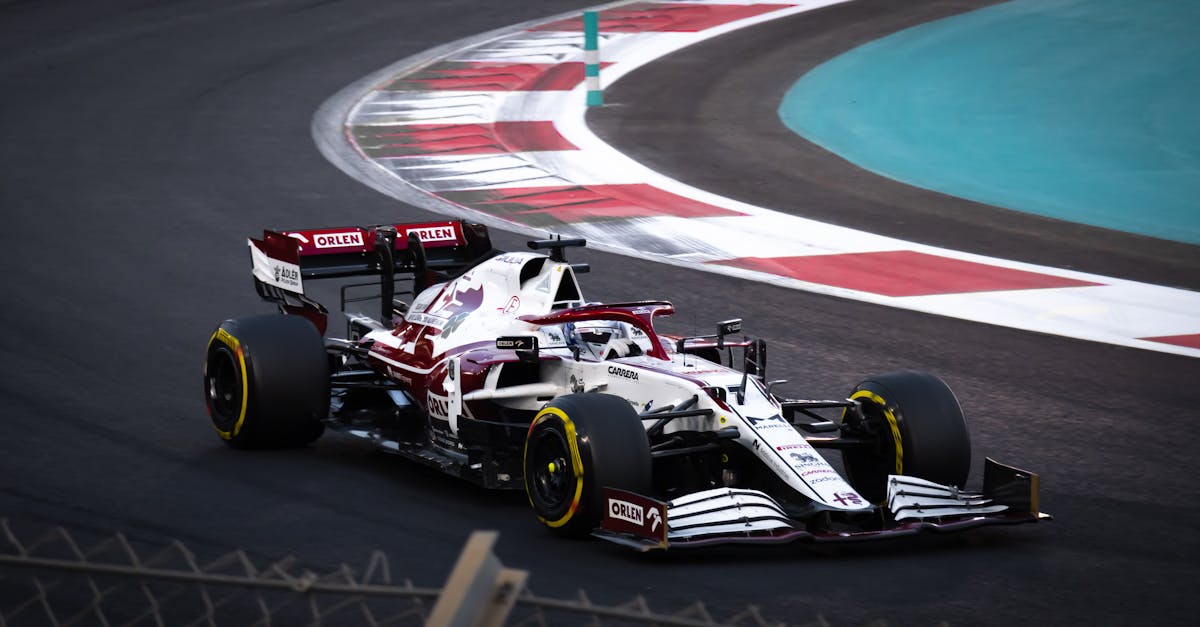
A Formula 1 car is a roughly 300 km/h engineering marvel in which almost every surface has a purpose. Nothing on it is decorative. The curve of a wing endplate, the sculpted lip of the floor, the shape of an air intake — each is the product of thousands of hours in the wind tunnel and on supercomputers, all in pursuit of a few hundredths of a second per lap. To the untrained eye it is a fast car with wings on it. To an engineer it is a tightly integrated system in which the engine, the tyres, the aerodynamics and the driver all have to work in harmony, or the whole thing is slow.
This guide is a guided tour of every major system on a modern F1 car. It is written for newcomers, but it does not talk down to you: by the end you should understand not just what the parts are, but why they exist and how they interact. Where the 2026 regulations changed things — and they changed a great deal — we will say so. If you are brand new to the sport, our companion piece on how Formula 1 works sets the scene, and the F1 glossary is handy for any jargon that trips you up.
The monocoque and the survival cell
At the very heart of the car is the monocoque, universally nicknamed the “tub”. It is a single moulded shell of carbon fibre — layers of woven carbon cloth set in resin and baked in an autoclave until they form a structure that is extraordinarily stiff and shockingly light. The driver sits inside it, legs stretched forward, effectively wearing the car like a bespoke suit. Everything else bolts onto this central spine: the power unit hangs off the back, the front suspension and nose attach to the front.
The tub doubles as the survival cell, the part of the car designed to stay intact when everything around it is destroying itself. In a heavy accident, the crumple zones do their job precisely so the survival cell does not have to. Bolted to the front, rear and sides are dedicated crash structures — sacrificial cones and panels engineered to absorb enormous energy by deforming in a controlled, progressive way. The nose is designed to break away; the survival cell is designed never to.
Sitting above the cockpit opening is the halo, a curved titanium bar anchored to the tub at three points. When it was introduced it was widely mocked for spoiling the car’s looks. That debate is long over. The halo is strong enough to withstand the load of a double-decker bus and has unquestionably saved lives, deflecting wheels, debris and even entire cars away from the driver’s head. It is, arguably, the single most important safety innovation of the modern era.
The power unit
Here is the first thing every newcomer should learn to say correctly: it is not an engine, it is a power unit. The distinction matters because a modern F1 power unit is really two power sources working together — a combustion engine and a substantial electrical system — plus the turbocharger, control electronics and energy store that tie them together.
The combustion side is a 1.6-litre turbocharged V6. That sounds modest — it is smaller than the engine in many family SUVs — but it is spun to extreme speeds, fed by a turbocharger, and engineered to a level of thermal efficiency that road-car makers can only envy. For 2026 it runs on 100% sustainable fuel, a genuinely significant change: the same fundamental chemistry, but produced from non-fossil sources so the sport can pursue performance and sustainability at once.
What makes 2026 a watershed is the balance of power. In the previous generation the combustion engine did the lion’s share of the work and the electrical system was a supporting act. Under the new rules the split is roughly 50/50 between combustion and electrical power. The engine has, in effect, been asked to do less on its own and the electric motor a great deal more. The combined output remains formidable — on the order of 1,000 horsepower when everything is deploying at once — but a far larger slice of it now comes from electricity. If you want the full picture of what changed and why, our guide to the 2026 rule changes goes deeper.
ERS: the electric side
The electrical half of the power unit is the Energy Recovery System, or ERS. Think of it as the car’s ability to capture energy that would otherwise be wasted, bank it, and spend it again as extra shove.
The star of the show is the MGU-K — the Motor Generator Unit, Kinetic. It is a single clever device that plays two roles. Under braking it works as a generator, using the car’s momentum to spin itself and produce electricity, in the process helping to slow the car (this is what “harvesting” means). Then, when the driver wants power, it flips into motor mode and drives the wheels, adding a surge of torque on top of the combustion engine (this is “deployment”). For 2026 the MGU-K’s electrical output has been dramatically increased — roughly tripled, to somewhere around 350 kW — which is precisely how the electrical side reaches near-parity with the engine.
The energy the MGU-K harvests is stashed in the energy store, a high-performance battery packaged low in the car for a good centre of gravity. The whole system is a constant balancing act: a driver cannot deploy full electric power on every straight of every lap, because the store would run dry. Managing harvesting versus deployment across a lap — knowing when to bank energy and when to spend it — is a real skill, and one the car’s software and the driver share.
One notable casualty of the 2026 rules is the MGU-H, the unit that used to recover energy from the turbocharger’s exhaust heat. It was brilliant but fiendishly complex and expensive, and it was removed to simplify the power units and lower the barrier to entry for new manufacturers. Separately, the old DRS overtaking flap has been replaced by a system nicknamed Manual Override: rather than a mechanical wing that stalls to cut drag, a chasing driver gets access to an extra burst of electrical deployment to help close in and attempt a pass.
Aerodynamics — where races are won
If the power unit is the car’s heart, aerodynamics is its soul — and the arena where championships are decided. The goal is to generate downforce: the bodywork is shaped so that air rushing over and under the car pushes it down onto the track. More downforce means more grip, which means higher cornering speeds. The enemy is drag, the resistance the same bodywork creates as it pushes through the air, which blunts top speed. Every aerodynamic decision is a trade-off between the two.
- Front wing. The first surface to meet the air, it does two jobs: it generates downforce over the front axle, and — just as importantly — it conditions the airflow for everything behind it. Get the front wing wrong and the whole car is compromised. It is the part teams adjust most often to tune the car’s balance.
- The floor, venturi tunnels and ground effect. This is the hidden hero of the modern car. The underside is sculpted into venturi tunnels that accelerate air beneath the floor, dropping its pressure and effectively sucking the car down onto the road. This is ground effect, and today it produces the majority of a car’s downforce. Because it works down low and creates relatively little drag, it is far more efficient than piling everything onto the wings.
- Rear wing and beam wing. At the back, the rear wing provides grip and stability for the rear axle, working with a lower beam wing that helps tie the rear wing’s airflow into the diffuser exiting from under the floor. Together they anchor the car in fast corners and under braking.
- Active aerodynamics (new for 2026). In a major departure, wings can now move. Cars run adjustable front and rear wings with a high-downforce mode for corners and a low-drag mode for straights, letting the car reconfigure itself for each part of the lap rather than settling for one compromise setup. Combined with smaller, narrower bodywork, this makes the 2026 cars sleeker and more efficient than their predecessors.
There is one persistent villain in all this: dirty air. A car’s beautifully ordered airflow becomes a churning, turbulent wake behind it. When a following car drives into that wake, its own aerodynamics stop working properly, it loses downforce, and it struggles to follow closely through corners — which is why overtaking can be so hard. A stated aim of the modern regulations, ground effect included, is to produce a cleaner wake so cars can race each other more closely.
Suspension and mechanical grip
Not all grip comes from the air. Mechanical grip is the grip that comes from the tyres, the suspension and the car’s weight distribution, and it dominates in the slow corners where there is too little speed for downforce to help much. The suspension connects the wheels to the tub and controls how the car behaves over kerbs, bumps and undulations. It keeps the tyres pressed against the track surface as consistently as possible, because a tyre that is skipping or unloaded is a tyre that is not gripping.
F1 suspension is stiff — these are not comfortable cars — but it is anything but crude. Engineers obsess over how the car pitches under braking, squats under acceleration and rolls through corners, because all of that movement changes the ride height and therefore how the aerodynamic floor works. Getting the mechanical platform right is what allows the aerodynamics to do their job, so the two are deeply intertwined.
Brakes
F1 braking performance is genuinely difficult to overstate. The discs and pads are made of carbon-carbon, a material that only works properly once it is glowing hot — you will often see the discs turning bright orange under heavy braking as they reach temperatures that would destroy a conventional steel brake. The upside is phenomenal stopping power: a car can shed enormous speed in a startlingly short distance, subjecting the driver to deceleration forces of several times gravity that press hard on the neck and chest.
On the rear axle the braking is brake-by-wire. Because the MGU-K is also slowing the car when it harvests energy, a computer has to blend the electrical braking and the friction braking seamlessly so the driver feels one consistent, predictable pedal. Do it badly and the car is unstable and unpredictable under braking, exactly where a driver most needs to trust it.
Tyres
For all the technology above it, the car’s entire relationship with the track passes through four contact patches of rubber each about the size of a hand. The tyres are the only part of an F1 car that touches the road, which makes them the single most important consumable in the sport. Pirelli is the sole supplier, providing a range of dry-weather compounds that trade outright grip against durability — softer rubber is faster but wears out sooner — plus intermediates and full wets for the rain.
Because the tyres are the final link in the chain, managing them shapes entire races: when to push, when to conserve, and when to pit. We cover all of it — compounds, degradation, strategy and the coloured sidewalls — in our dedicated guide to F1 tyres explained.
The steering wheel
An F1 steering wheel is less a wheel than a portable mission control. It is a flat, rectangular slab bristling with buttons, rotary dials, paddles and a display screen, and it costs as much as a small car in its own right. Behind the wheel sit the shift paddles for the eight-speed gearbox and the clutch paddles used at the start.
From those controls, without lifting off the throttle, a driver can adjust brake balance front to rear, change the differential settings that govern how power is split between the rear wheels in and out of corners, cycle through energy modes that dictate how the ERS harvests and deploys, trim the engine’s behaviour, talk to the pit wall, take a drink, and much more. Modern racing asks the driver to be a systems operator as well as an athlete, and the wheel is where that job is done.
Cooling, sidepods and packaging
A power unit producing that much energy also produces a great deal of heat, and heat is the enemy of both reliability and performance. The sidepods — the bodywork flanking the cockpit — house the radiators and channel cooling air through the car to keep the engine, the turbo and, crucially, the battery within their operating temperatures. Air enters through carefully shaped inlets and exits through louvres and outlets sculpted to shed heat without wrecking the airflow feeding the rear of the car.
This is the great packaging trade-off. Every extra bit of cooling makes the car more reliable but demands bigger openings that hurt aerodynamic performance; every gram shaved and every millimetre of bodywork pulled tight makes the car faster but leaves less margin on a hot day. The best teams package the whole car — power unit, cooling, suspension and aero — so tightly that it looks effortless. It never is.
Weight, the cost cap and the bigger picture
In racing, lighter is almost always faster: less mass means quicker acceleration, later braking and higher cornering speed. F1 therefore sets a minimum weight the cars must not go below, so teams cannot simply spend their way to an impossibly light machine. For 2026 the cars are smaller, narrower and around 30 kg lighter than the previous generation, with reduced downforce and drag to match — a deliberate move towards nimbler, more efficient racing.
Sitting over the whole enterprise is the cost cap, a hard annual limit on what each team may spend on car performance. It has quietly become one of the most influential design constraints in the sport. Engineers can no longer chase every idea; they have to decide which developments are worth the money, and a clever, cheap solution can now beat an expensive one that a rival simply could not afford to keep pursuing. The result is a car that is the product not only of physics, but of budget discipline.
| Characteristic | Typical / qualitative value |
|---|---|
| Power unit | 1.6L turbo-hybrid V6, ~50/50 combustion and electric |
| Combined output | On the order of ~1,000 hp when fully deploying |
| Electrical boost (MGU-K) | Roughly tripled for 2026, in the region of ~350 kW |
| Fuel | 100% sustainable |
| Chassis | Carbon-fibre monocoque with titanium halo |
| Downforce source | Mostly the floor (ground effect), plus front and rear wings |
| Overtaking aid | ”Manual Override” electrical boost (replaces DRS) |
| Tyres | Pirelli, multiple dry compounds plus wets |
| 0–100 km/h | Comfortably under ~3 seconds |
| Braking | 300 km/h to a stop in a few seconds; several g of deceleration |
| Weight | At or above the regulated minimum; ~30 kg lighter for 2026 |
Frequently asked questions
Is an F1 car’s engine really only 1.6 litres?
Yes — the combustion engine is a 1.6-litre turbocharged V6, which surprises many people. The trick is that it is only half the story. The electrical side of the power unit adds enormous output, and for 2026 that electrical contribution is roughly equal to the engine’s, so the tiny displacement belies a combined output around 1,000 horsepower.
Why did F1 get rid of DRS for 2026?
DRS was a movable rear-wing flap that reduced drag to help a chasing car catch and pass. With the 2026 shift to active aerodynamics — where the wings already move between low-drag and high-downforce modes on their own — a separate drag-reduction flap made less sense. In its place, the chasing driver now gets “Manual Override”, an extra burst of electrical power, to attempt an overtake.
Where does an F1 car’s downforce actually come from?
Most of it now comes from the floor rather than the wings. The underside is shaped into venturi tunnels that accelerate air beneath the car and create a low-pressure zone that sucks it down — the “ground effect”. The front and rear wings still matter for balance and stability, but the floor does the heavy lifting.
Why is it so hard for F1 cars to follow each other closely?
Because a car leaves a turbulent wake of “dirty air” behind it. When a following car enters that disturbed air, its own aerodynamics lose effectiveness and it sheds downforce, making the corners harder and the car twitchier. Reducing this effect so cars can race closely is one of the guiding aims of the modern rulebook.
The bottom line
An F1 car is not a collection of impressive parts so much as one deeply integrated system, where the power unit, the aerodynamics, the tyres and the driver all depend on one another. The 2026 generation sharpens that story: near-equal electric and combustion power, sustainable fuel, movable wings, smaller and lighter bodywork, and a cost cap that rewards cleverness over spending. Once you can look at a car and see why each surface is shaped the way it is, you are no longer just watching fast machines go round — you are reading the engineering argument playing out on track, which is a large part of what makes every season so compelling.