
Aston Martin's Quiet Revolution Raises Questions About Newey's Legacy
Analyzes surprising praise for Aston Martin's turnaround and the swirling theories about Adrian Newey's declining influence.
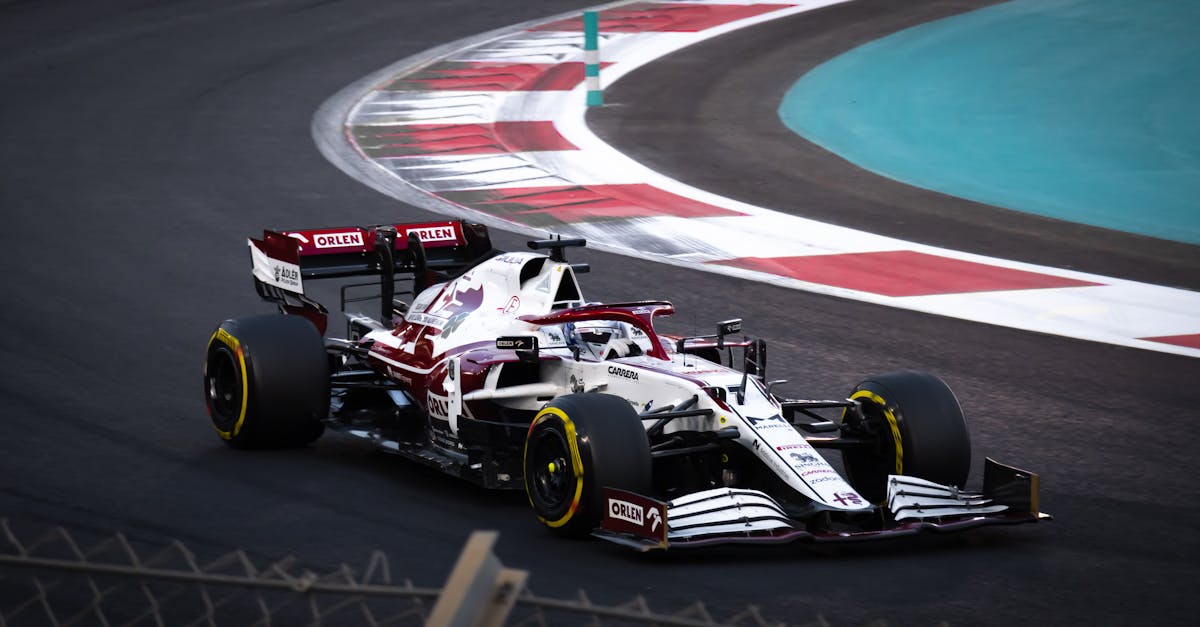
Aston Martin’s Quiet Revolution Raises Questions About Newey’s Legacy
There is a particular kind of paddock chatter that matters more than the results sheet, and this week Aston Martin found itself the subject of it. Guenther Steiner, never a man to dispense compliments idly, has reportedly placed Aston Martin among F1’s improving tier heading into the second half of the 2026 season — a notable shift for a team that, by his own characterisation, knew full well how poor it had been. At the same time, a separate and rather more provocative narrative has taken hold: that Adrian Newey’s influence at the team is already waning, barely more than a year into his tenure. The juxtaposition of these two stories — genuine, insider-sourced praise for Aston Martin’s trajectory, and speculation about the diminishing role of the sport’s most decorated designer — is the real story here, and it deserves unpacking on its own terms rather than as parallel gossip items.
What’s Actually Being Said
Steiner’s tier-mapping is significant precisely because of who he is: a man who has sat on both sides of the pit wall divide, run a team through its own painful development curve at Haas, and now speaks with the freedom of someone no longer fighting for grid position himself. When a figure like that singles out Aston Martin for credit — implicitly contrasting the team’s current state with an admission that it “knew it was” struggling — it carries more weight than a generic paddock platitude. It suggests the improvement is being noticed not just in isolated results but in the underlying trend, the sort of thing insiders pick up on before it shows fully in the championship table.
Set against that is the theory, aired by Johnny Herbert and picked up widely, questioning whether Aston Martin’s revamped fortunes might actually be happening in spite of, or separately from, Adrian Newey’s direct hand — the suggestion being that his influence is not translating as immediately or as visibly as expected. It is worth being precise about what this theory is and isn’t. It is not a claim that Newey has lost his technical acumen; nobody serious is arguing that. It is a question about integration, about how quickly even the greatest designer in the sport’s history can reshape a car, a factory and a culture that were built around different processes before his arrival.
Why It Matters
These two storylines matter together because they cut against the narrative Aston Martin itself has been selling since Newey’s arrival was announced: that his presence alone would be transformative, a shortcut to the front that money and ambition hadn’t yet bought. If the team’s genuine on-track and developmental progress is being praised by people like Steiner without a clear line back to Newey’s specific fingerprints, it forces a more honest conversation about what a signing like his actually delivers in year one — and how long a genuine philosophical overhaul of a car and organisation actually takes, even for someone with his track record at Williams, McLaren and Red Bull.
It also matters competitively. Aston Martin’s ownership has invested at a scale few midfield teams can match — new factory, new wind tunnel, and a technical leadership triumvirate assembled specifically to end the team’s plateau. If that investment is starting to pay dividends independent of Newey’s most visible contributions, it raises a legitimate question about sequencing: is the team’s improvement the product of organisational and personnel changes that predate or run parallel to his arrival, with his full aerodynamic philosophy still to be layered in for 2026 and beyond? That is a very different story to “Newey has already fixed it,” and a far more plausible one given how car development cycles actually work.
The Wider Context
This is also why Max Verstappen’s situation is relevant, and why the Crash.net framing of him “keeping an eye” on Aston Martin’s progress is worth taking seriously rather than dismissing as transfer-window filler. Verstappen, enduring his least competitive Red Bull campaign, is the driver whose market value is most sensitive to precisely this question: is Aston Martin’s upward curve real, structural and Newey-driven, or is it a plateau-lifting bump that could stall once the low-hanging fruit is gone? A driver of Verstappen’s calibre does not move teams on sentiment; he moves on evidence that the trajectory is sustainable. Steiner’s praise is exactly the kind of external validation that feeds into those calculations, while the Newey scepticism is exactly the kind of counter-signal that tempers them.
There’s also historical precedent worth remembering. Newey’s transformative periods at Williams, McLaren and Red Bull were never instant — they took a season or more to fully manifest as regulations were digested and organisational trust was built. Judging his impact on a one-year sample, especially at a team still rebuilding its facilities and pipeline, risks mistaking normal lag for stagnation.
GP Headlines’ Take
The sensible reading sits between the two extremes. Aston Martin’s progress looks genuine enough to earn respect from serious voices like Steiner, and that alone is a meaningful marker after years of underperformance relative to ambition. But it would be premature, and probably unfair to Newey, to read early gains as evidence he’s already fading in influence — or to read them as proof his influence is the primary driver just yet. The truthful answer is likely that Aston Martin is improving through multiple channels simultaneously, with Newey’s fullest impact still to arrive. Whether that’s fast enough to convince a driver of Verstappen’s stature to bet his career on it is the question genuinely worth watching.