
Monza sets the stage for a weekend of engines, escape clauses and one very famous cartoon car
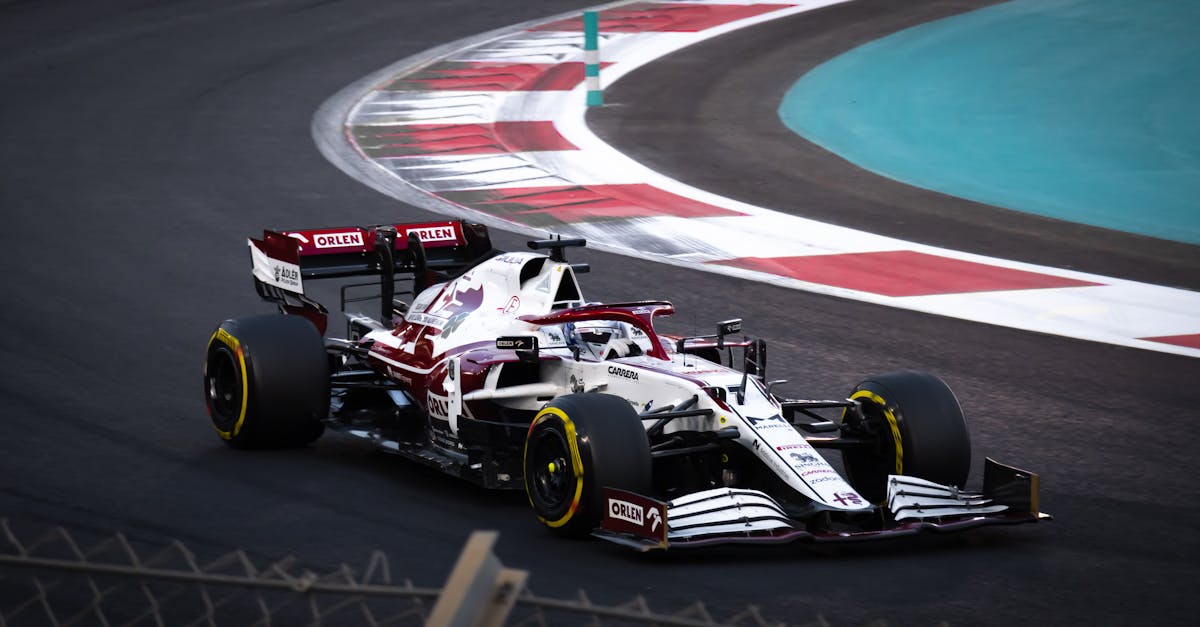
There’s a particular energy to Monza that no other circuit on the calendar quite replicates — the cathedral of speed, the tifosi banking every hope on the red cars, and this year an added layer of intrigue because so many of the sport’s power-unit and personnel storylines are converging on the Autodromo Nazionale at once. Ferrari arrives with a genuine engine step it believes can move the needle, Aston Martin is being talked about in terms of hitting bottom and climbing back, Red Bull wants to erase the memory of a flat home weekend, and Franco Colapinto’s Zandvoort saga has spilled into a face-to-face with the FIA president. Add in a weather warning that threatens to complicate a circuit already unforgiving of mistakes, and you have the ingredients for a proper Italian Grand Prix rather than a processional home celebration.
Ferrari’s engine gamble — and why Hamilton’s language matters
The headline act at Monza is Ferrari’s new power-unit specification, the ADUO2, and the way Lewis Hamilton has framed his expectations tells you a great deal about where Ferrari currently sits as an organisation. Calling something a “North Star” is not throwaway language from a seven-time world champion who has spent the best part of a year adjusting to a new team, a new philosophy and, by his own admission, a car that hasn’t always let him drive the way he wants to. It signals that Hamilton sees this upgrade not just as a horsepower bump but as a marker of direction — proof that Ferrari’s engine department can identify a weakness and solve it, which matters enormously for a team whose recent power-unit generation has generally been competitive but rarely dominant.
The complicating detail is that this upgrade isn’t universally available. Haas, as a Ferrari customer, only has one uprated unit to distribute this weekend, and it’s going to Oliver Bearman rather than Esteban Ocon. On the surface this reads as a minor logistical footnote, but it’s actually a useful window into how the customer-engine relationship works in practice. Ferrari can only produce and homologate new specifications at a certain rate, and when supply is tight, allocation decisions become quietly political — team performance, driver form, and even homologation-freeze mechanics around when parts can be introduced all play a part. Ocon has been admirably matter-of-fact about missing out, but it’s a reminder that being a “customer” team, however good the relationship, still means sitting at the back of the queue when the manufacturer’s own priorities — and its two flagship drivers — come first.
Why this engine cycle carries extra weight
- 2026 rules loom. With a wholesale regulation change arriving next year, every gain made now on the current-generation power unit still matters for constructors’ points and psychological momentum heading into the reset.
- Ferrari’s home race stakes. An upgrade unveiled at Monza, in front of the tifosi, is as much a statement of intent as it is a technical exercise — Ferrari knows the optics of a step forward here carry disproportionate weight.
- Hamilton’s adaptation. A tangible, felt improvement in engine performance is exactly the sort of building block Hamilton needs to start feeling like the car is moving towards him rather than the other way around.
Aston Martin: rock bottom, weight limits, and Honda’s growing pains
David Coulthard’s assessment that Aston Martin has hit “rock bottom” and is now on the way back up is a bold public framing, but it’s hard to dismiss it as pure punditry given how the team’s own communications have shifted in tone. Aston Martin have confirmed they’re not planning further meaningful upgrades to the 2026 car beyond continuing to strip weight out of it, with the target of getting close to the minimum weight limit by the Azerbaijan Grand Prix. That’s a telling admission in itself — it means the current car’s aerodynamic and mechanical package is essentially locked, and any remaining performance gain this season will come from the unglamorous, incremental business of finding grams rather than lap time through new parts.
Layered onto that is Fernando Alonso and Lance Stroll both flagging concerns about Honda’s upgraded power unit, which Honda has at least had the candour to acknowledge as a weakness rather than deflect. This is worth sitting with for a moment, because Aston Martin’s entire medium-term project is built around the Honda partnership arriving in full works form for 2026. If the early signs of that power unit are inconsistent, it doesn’t necessarily mean disaster — teething problems with a new manufacturer relationship are normal, and Honda’s history at the top of F1 (Red Bull’s championship-winning years included) suggests the technical capability is there. But it does mean the timeline for Aston Martin’s championship ambitions, already aggressive given the scale of investment in the Silverstone campus and Adrian Newey’s arrival, could need recalibrating.
Alonso’s own position is the more immediately newsworthy thread. His blunt comments on his future, still undecided, sit awkwardly alongside his public backing of the Honda project — he clearly believes in where this is heading long-term, even if he’s not yet ready to commit himself to being part of that journey personally. That’s a very Alonso position: intellectually invested in the technical project, emotionally guarded about tying himself to another multi-year commitment at 44 years old with no guarantee of the timeline working in his favour. Coulthard’s “rock bottom” framing may prove accurate in hindsight, but Aston Martin’s recovery arc depends almost entirely on Honda delivering a power unit that doesn’t undercut everything else the team has built.
Colapinto’s Alpine future, and the diplomacy after Zandvoort
Franco Colapinto’s extended stay at Alpine through 2027 is one of the more significant contractual stories of the season precisely because it wasn’t guaranteed a few months ago. His comments about his broader goals in the sport suggest a driver who sees this extension not as a consolation prize but as the platform from which to build something more substantial — sensible framing from a driver who needs stability and continuity more than he needs another change of scenery after his difficult introduction to F1 with Williams.
What makes this week’s Colapinto story more layered is the revelation that he’s been in direct dialogue with FIA president Mohammed Ben Sulayem over the fallout from his Zandvoort penalty. Meetings of this kind between a driver and the FIA’s top office don’t happen over trivial matters, and it points to Colapinto — or Alpine on his behalf — feeling strongly enough about the stewarding outcome to escalate it beyond the usual team-versus-stewards channels. Without over-reading a private conversation, it fits into a wider pattern this season of drivers and teams pushing back more vocally on penalty consistency, something that’s been a recurring theme in F1’s governance conversations for years. Whether it changes anything about how Zandvoort is remembered is one question; whether it signals Colapinto’s growing confidence in advocating for himself at the highest level of the sport’s political structure is arguably the more interesting one.
Antonelli’s penalty and Wolff’s pointed message
Toto Wolff’s warning that Formula 1 “doesn’t reward sentimentality” lands at a moment when Kimi Antonelli is about to take a grid penalty at Monza — about as unforgiving a circuit as exists for losing places, given how track position and slipstream trains dictate the race. It’s a reminder, aimed as much at outside expectation as at Antonelli himself, that Mercedes’ investment in fast-tracking an 18-year-old into a top seat comes with the understanding that the sport won’t soften its edges just because the story is a sympathetic one.
There’s a broader point here about how Mercedes is managing Antonelli’s rookie campaign. Wolff has never been shy about protecting young drivers publicly while privately holding them to full professional standards, and this comment reads as pre-emptive expectation management — a signal to fans and media not to treat a likely below-par result at Monza as a crisis, but also a signal to Antonelli that results, not narrative goodwill, are what will define his trajectory. Rookie seasons are rarely linear, and a power-unit-related grid drop is a mechanical setback rather than a driving one, but how Antonelli responds on Sunday — clawing back places through a notoriously slipstream-dependent circuit — will still be watched closely as a data point on his race-day maturity.
Verstappen’s reset after a flat home weekend
Max Verstappen heading into Monza with a specifically stated fresh target, after describing his Zandvoort home race as disappointing, is a fairly unambiguous signal that Red Bull’s championship-defence campaign hasn’t been running as smoothly as their recent results record might suggest from a distance. Verstappen is not a driver prone to dwelling publicly on setbacks, so an explicit acknowledgement of a below-standard weekend is worth noting. Monza’s characteristics — low-downforce, engine-sensitive, high-speed — should in theory suit a Red Bull package that has generally handled a range of circuit types well this generation, and it gives Verstappen a natural opportunity to reset the narrative with a strong result on a circuit where straight-line efficiency and mechanical grip through the Lesmos and Ascari matter more than ultimate downforce.
On the radar
- Monza weather uncertainty: the FIA’s official warning raises the prospect of changeable conditions disrupting practice and qualifying strategy at a circuit where track evolution and slipstreaming already make session management tricky.
- Brembo’s dual challenge: adapting brake systems to the demands of the current regulations while simultaneously engineering for 2027 is a reminder that suppliers, not just teams, are quietly managing two rulebooks at once.
- Bearman vs Ocon dynamic at Haas: worth watching whether the engine allocation split translates into a tangible performance gap between team-mates this weekend.
- Honda’s response to Alonso and Stroll’s criticism: how quickly and convincingly Honda can address the flagged upgrade weakness will be an early indicator of how smooth the works-team transition to 2026 might be.
- F1’s Cars crossover at Monza: Lightning McQueen’s appearance as a track vehicle, tied to a multi-year extension between F1 and the franchise, is a lighter storyline but underlines how aggressively the sport continues to court cross-generational, family audiences.
The takeaway
Strip away the individual headlines and Monza looks like a weekend where the sport’s medium-term power struggles are being quietly reshuffled: Ferrari testing whether an engine upgrade can translate self-belief into results, Aston Martin and Honda discovering that building a championship-calibre power unit from scratch takes longer than any marketing timeline suggests, and Red Bull needing Verstappen’s home-soil disappointment to be the exception rather than a pattern. None of these stories will be resolved by Sunday evening, but Monza has a habit of clarifying momentum — and by the time the tifosi go home, we should have a much better sense of which of these narratives are genuine turning points and which were just the noise before the next chapter.