
F1 today: the stories everyone's talking about — 8 Oct 2026
GP Headlines' round-up and analysis of the biggest Formula 1 storylines making news right now.
Singapore throws up its usual riddle, and the paddock’s patience is wearing thin
Marina Bay has a habit of exposing whatever is fraying at the edges of a Formula 1 season, and this week it’s doing exactly that. A sprint format bolted onto the calendar’s most physically brutal weekend, a championship fight that keeps lurching sideways, and a simmering debate about driver comfort versus driver vanity — all of it collides under the lights this weekend. Add in some Ferrari farce on Instagram and a Mercedes team quietly admitting it’s lost its way on development, and you have a paddock that feels more unsettled than the title table alone would suggest.
Singapore’s new sprint wrinkle has drivers genuinely unsure
The Marina Bay Street Circuit earns its reputation as the calendar’s toughest physical examination through humidity, kerbs, and nearly two hours of unrelenting concentration under floodlights with barely a breath of straight-line respite. This year Formula 1 has decided to sharpen that test further by handing it a sprint weekend for the first time in the race’s history, and the honesty coming out of driver briefings — “am I confident? Probably not” being the standout admission — tells you this isn’t a case of drivers being coy for effect.
The maths behind the unease is straightforward enough. Sprint weekends compress track time into a single, high-stakes practice session before parc fermé conditions lock in set-ups, and at a circuit as unforgiving as Singapore that’s a genuine gamble. Marina Bay punishes guesswork more than almost anywhere else: get the ride height or brake balance wrong here and you’re not just losing lap time, you’re clattering into barriers that sit uncomfortably close for 23 corners. Normally teams get a full Friday and most of Saturday morning to iron out such problems. This weekend they get a fraction of that, in temperatures that already stretch car and driver to their limits.
It’s a reasonable experiment in isolation — sprints have generally livened up calendar fixtures that risked becoming processional — but Singapore was never crying out for that treatment. This is a circuit whose drama has always come from the race itself: safety car chaos, strategy gambles, drivers wilting physically in the final stint. Layering sprint unpredictability on top of that rather than, say, a circuit that needed spicing up, feels like Formula 1 reaching for a formula that’s worked elsewhere without asking whether it’s needed here. We’ll find out by Sunday night whether the gamble pays off in spectacle, or whether it simply punishes teams and drivers for a scheduling decision that owed more to calendar variety than genuine need.
Verstappen’s title tilt meets his final unconquered frontier
Of all the records chasing Max Verstappen, Singapore’s is the most conspicuous: Madrid’s absence from his win column is self-explanatory since it isn’t yet on the calendar, but Marina Bay is the one circuit that has genuinely eluded him. Red Bull’s “unfinished business” framing isn’t just paddock spin — it reflects a real historical quirk. Verstappen has mastered temperature extremes, mastered street circuits, mastered tyre degradation puzzles everywhere else, yet Singapore’s unique demands (low-speed traction, bumpy kerbs, a car that needs to ride compliance without sacrificing peak downforce) have repeatedly found the one gap in Red Bull’s otherwise comprehensive package.
The suggestion that Red Bull may finally have addressed that weakness matters enormously given where the championship stands. Every point Verstappen can extract from a circuit that has historically worked against him is a point his rivals can’t claw back elsewhere. If Red Bull really has found the set-up answer to Marina Bay’s particular demands, it closes off what was arguably the last reliable excuse for a non-Verstappen result at a circuit he doesn’t already dominate. That’s a sobering thought for whoever’s chasing him in the standings — it suggests there may soon be nowhere left on the calendar where the field can count on Red Bull’s car working against itself.
The cooling vest stance fits a pattern
Verstappen’s blunt dismissal of the cooling vest — “I don’t need it” — alongside the broader driver push to have them banned, is worth reading as more than personal bravado. These vests were introduced as a response to genuine heat-related distress suffered by drivers in recent years, Singapore chief among the circuits that caused it. A push to ban them, led by drivers who presumably feel the technology is more hindrance than help in its current form (compromised fit, added weight, questionable actual cooling benefit), is a legitimate technical conversation. But it also plays into Verstappen’s broader brand of treating physical hardship as something to be endured rather than engineered away — consistent with his stance on other driver aids he considers unnecessary mollycoddling. Whether that’s admirable toughness or an unhelpful flex that pressures less physically robust drivers into discarding genuinely useful equipment is a fair question for the paddock to keep asking.
Russell’s uncomfortable self-assessment
There’s a particular kind of credibility that comes from a driver declining to hide behind misfortune, and George Russell’s admission that his season hasn’t been good enough “independent of the good luck or the bad luck” carries exactly that weight. It would have been easy, and not entirely inaccurate, for Russell to point to reliability issues and the general unpredictability that has characterised Mercedes’ campaign. Instead he’s drawn a harder line, separating the genuine bad breaks from performances he simply isn’t satisfied with.
That kind of candour matters because Mercedes’ 2025 has been a season of partial recovery rather than full restoration, and Russell’s role within it was supposed to be the steadying one — the experienced reference point around which a rebuilding team could be measured. Self-criticism this pointed suggests he knows that job hasn’t been fully discharged. It’s also a useful corrective to the lazy narrative that every retirement or off-weekend is simply the car’s fault; Russell’s own words suggest the driver side of that ledger needs scrutiny too, and he’s not dodging it.
Mercedes’ Sepang headache follows the drivers to Singapore
That self-assessment arrives in the same week Mercedes has confirmed George Russell and Kimi Antonelli will run differing car packages at Marina Bay, a direct consequence of updates that simply didn’t work as intended in Malaysia. Splitting specifications between team-mates is rarely a sign of confidence — it’s a diagnostic measure, an attempt to isolate variables when a team can’t be sure which direction is actually faster. For a team still trying to re-establish a clear development trajectory after several years of chasing Red Bull and now McLaren, this is an uncomfortable admission that the understanding of their own car remains shakier than they’d like heading into a run of circuits that reward precision above all else.
McLaren’s Baku gremlin follows them to Marina Bay
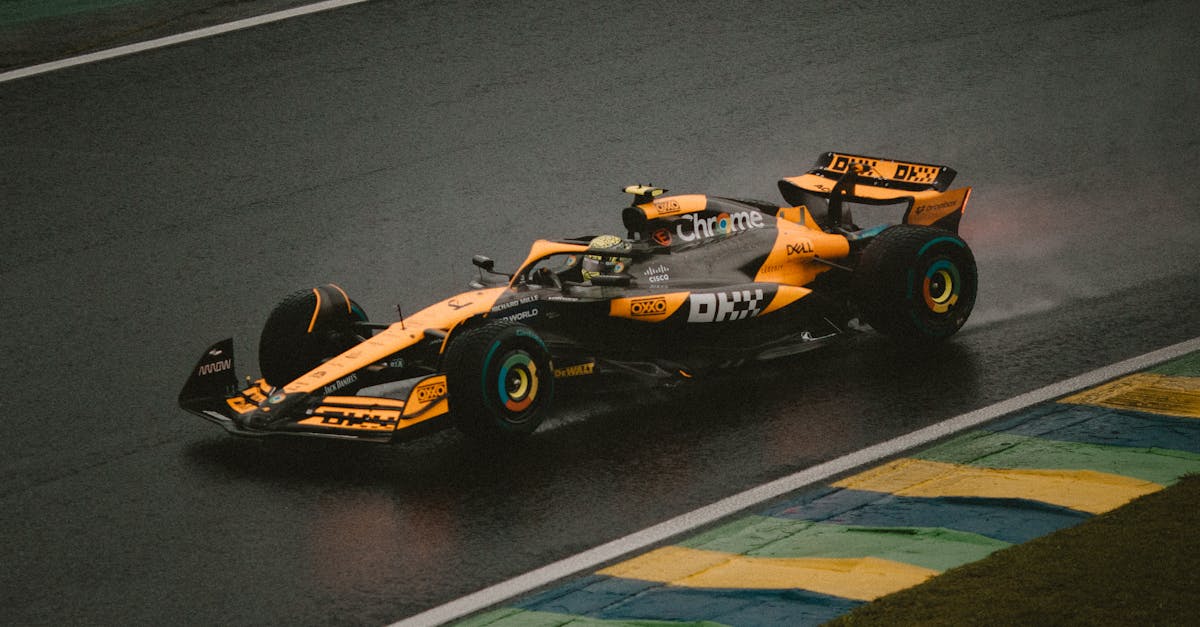
McLaren’s form this season has been built on a car that’s broadly the class of the field, which makes the fuel system issue that blunted Lando Norris’s pace on Baku’s long straight all the more frustrating — a mechanical quirk undermining a championship-calibre package rather than any shortfall in performance. The peripheral changes McLaren has made to Norris’s Mercedes-supplied power unit ahead of Singapore read as a targeted fix rather than a wholesale rethink, which is the right approach: you don’t want to disturb a winning package chasing a problem that’s specific and identifiable.
Still, the timing carries its own tension. Singapore won’t expose the same long-straight vulnerability Baku did, so this weekend offers little direct evidence of whether the fix has worked — that verdict will have to wait for a circuit with comparable straight-line demands. For a team embroiled in a tight constructors’ fight, banking a quiet, trouble-free Singapore while carrying lingering uncertainty about Baku’s root cause into the next power-sensitive track is a reasonable trade-off, but it’s not the clean resolution McLaren would have preferred heading into the championship run-in.
Ferrari’s social media chaos, and the human side of the paddock
Amid the technical seriousness, Ferrari’s Instagram being briefly commandeered by Lewis Hamilton and Charles Leclerc, followed by the team’s own tongue-in-cheek “unofficial statement,” was a welcome reminder that this is still a sport with personality beneath the data. It’s a small story, but small stories like this do real work for a team’s public image — Ferrari’s willingness to laugh at itself publicly plays rather better than stony silence would have, especially during a season where the team’s on-track position hasn’t always given fans much to smile about.
Hamilton’s week has otherwise been a tale of two very different passions. The F40 restoration story he’s shared in detail is a reminder of what draws him, and plenty of lifelong petrolheads, to this sport in the first place — mechanical romance rather than millimetre-perfect aero correlation. Set against that is his more pointed commentary on the FIA and younger drivers’ approach to wet-weather caution, where he’s clearly unimpressed by what he sees as an overly conservative instinct creeping into how wet sessions are being handled. Hamilton, a driver whose reputation was partly built on wet-weather brilliance, isn’t shy about saying so when he thinks a generational shift in risk tolerance is costing the sport some of its drama. It’s a debate worth having honestly rather than defensively — caution driven by safety concerns is legitimate, but caution driven by risk-averse racecraft is a different thing entirely, and the two shouldn’t be conflated.
On the radar
- Esteban Ocon’s blunt reaction to losing his 2027 seat — a reminder of how hard-won his F1 place has been, and worth watching how it shapes his approach at Haas through the rest of this campaign.
- Valtteri Bottas’s Sepang-to-Singapore bike ride — a lighter story, but a genuine window into how seriously some drivers now treat off-track endurance as part of their professional discipline.
- Zak Brown’s reported $100m bonus — a figure that will raise eyebrows given F1’s ongoing conversations about cost control, even if team principal and executive pay sits outside the cost cap.
- Mercedes’ split-spec gamble at Marina Bay — worth watching whether it actually produces clarity, or simply muddies the picture further with two incomplete data sets.
- Red Bull’s Singapore set-up claims — the clearest test yet of whether Verstappen’s last unconquered circuit is about to fall.
- The cooling vest debate — a seemingly small equipment question that touches on bigger issues of driver welfare, machismo, and how F1 balances both.
Singapore has always been a circuit that tells you the truth about where a team or driver really stands, stripped of the usual excuses that quicker, cooler races allow. With a sprint format added to the mix for the first time, that truth may arrive faster and more unforgivingly than usual — and on this evidence, not everyone in the paddock is quite ready for what it reveals.