
F1 today: the stories everyone's talking about — 1 Oct 2026
GP Headlines' round-up and analysis of the biggest Formula 1 storylines making news right now.
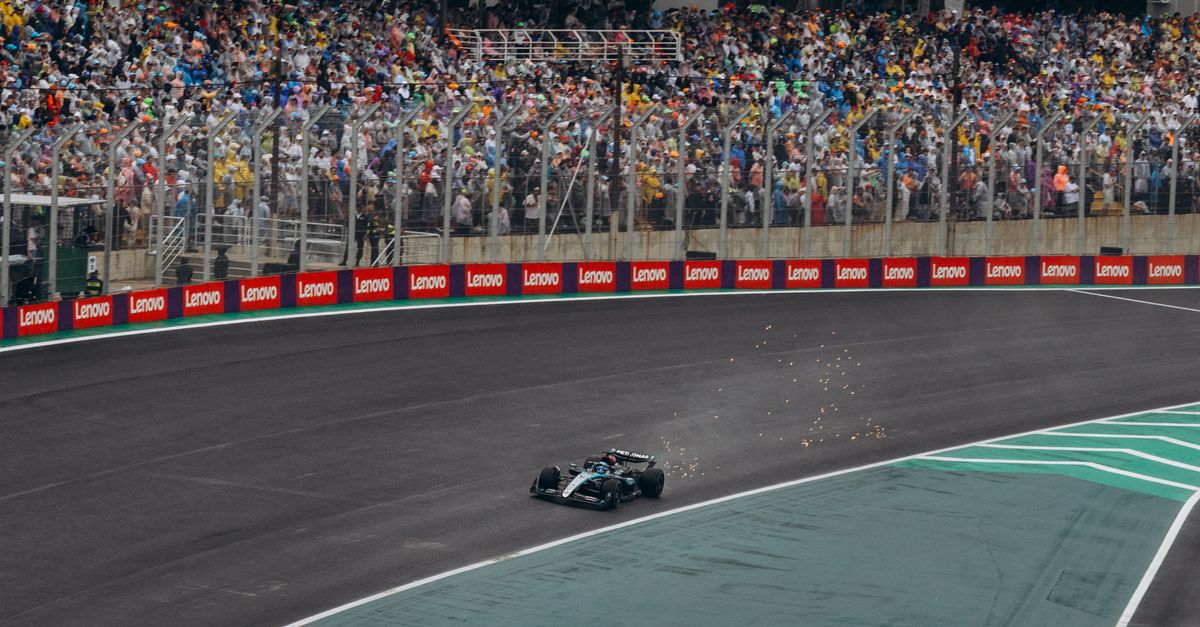
The paddock arrives in Malaysia this week carrying an unusual geographic footnote — a Bahrain Grand Prix being run nowhere near Sakhir — but the stranger subplot is everything swirling around the teams themselves. Ferrari is fighting a political fire it didn’t need, Mercedes is finally showing its working on the car’s core weakness, two Red Bull-affiliated rookies are staring at grid drops before a wheel is turned in anger, and the fallout from Baku’s first-lap chaos has spilled into territory far uglier than motor racing should ever have to deal with. It’s a weekend where the on-track story — stifling heat, degrading tyres, a sweltering Sepang-style test of man and machine — risks being overshadowed by everything happening off it.
Ferrari’s leadership question refuses to go away
The Vasseur-Horner speculation has reached the point where neutral voices are now wading in publicly, and when a broadcaster as measured as Will Buxton calls the idea of swapping Fred Vasseur for Christian Horner “absolutely ludicrous,” it tells you how far this rumour mill has drifted from sober reality. Vasseur has steadied Ferrari since replacing Mattia Binotto, instilling a calmer, more structured operation after years of strategic self-harm and public infighting. Results haven’t always followed instantly — they rarely do at Maranello, where the weight of expectation distorts every evaluation — but the internal culture is unrecognisable from the chaos of 2022.
Horner, for his part, left Red Bull under circumstances that were never fully aired publicly, and while his record of four constructors’ and multiple drivers’ titles is undeniable, parachuting him into Ferrari now would be a seismic, high-risk reset rather than a sensible evolution. Charles Leclerc clearly sees it that way too. His “disrespectful” framing of the rumours wasn’t just loyalty for loyalty’s sake — it was a driver who has worked hard to rebuild trust with his team principal after a difficult few seasons, publicly refusing to let speculation destabilise that relationship before it’s even tested by results.
Why this matters beyond the gossip
- Timing: stirring this now, mid-season rather than at a natural contract juncture, maximises disruption for minimal apparent gain.
- Precedent: Ferrari’s history of destabilising team principals mid-tenure (Domenicali, Arrivabene, Binotto) is a pattern it can ill afford to repeat if it wants the long-term stability its rivals have built.
- Driver buy-in: Leclerc’s intervention matters because driver-principal trust is often the difference between a team executing cleanly under pressure and one that fractures at the first strategic error.
Our take: unless there’s a concrete performance or conduct issue being deliberately kept from public view, removing Vasseur now would look less like ambition and more like Ferrari relapsing into its oldest, most self-defeating habit.
Two grid penalties, one shared bloodline
Isack Hadjar and Arvid Lindblad arrive in Malaysia both facing the sharp end of the FIA’s penalty points and parts-usage regulations, and it’s a reminder of how unforgiving the current sporting framework is for young drivers still building a reputation. Lindblad’s drop to the back of the grid is the more severe of the two, almost certainly tied to component changes that push him beyond his permitted allocation — the kind of technical infringement that has nothing to do with driving standards but everything to do with a junior team managing a tight budget and an aggressive development programme.
Hadjar’s situation is softer by comparison but still costly, arriving at the worst possible moment given the context of his “huge step” performance in Baku. His stated plan to replicate that approach in Malaysia is notable precisely because the circumstances are inverted — in Baku he was racing forward through the field after a strong qualifying; here he’s doing it by necessity, from a compromised grid slot, which is a very different examination of racecraft. Starting further back forces more overtakes in traffic, more tyre-management trade-offs, and less control over your own race — exactly the conditions that separate drivers who are merely quick from drivers who are genuinely ready for a top seat.
For Racing Bulls, this is a bruising weekend on paper but not necessarily a damaging one in substance. Both drivers have shown recent form; penalties serving at Sepang’s unusually hot, abrasive conditions might actually offer them a stiffer, more instructive test than a clean qualifying effort would have.
Mercedes finally addresses the W17’s Achilles heel
Upgrades at this stage of a season are rare enough that when Mercedes brings one, it’s worth taking seriously — teams generally only commit scarce development resource mid-year when a weakness has become too costly to ignore. The fact this package is specifically targeted at the car’s “most glaring and fundamental weakness” suggests Mercedes has stopped treating the issue as a tuning problem and started treating it as a design one.
George Russell’s comments add useful colour here. His talk of a “breakthrough” in understanding the car, paired with genuine excitement about this upgrade, implies the team has finally isolated the root cause rather than continuing to firefight symptoms race to race. That distinction matters enormously in modern F1: a car whose weakness is understood can be developed against; a car whose weakness is merely managed through setup compromises will keep resurfacing whenever conditions change.
The Malaysian heat makes this a genuinely searching environment for such an upgrade. Russell’s separate concern about tyre overheating is directly relevant — if the W17’s underlying issue has been generating excess thermal load through the tyre (a common symptom of poor aerodynamic balance or rear-end instability), then high ambient and track temperatures in Sepang-style conditions will expose any shortfall ruthlessly. A upgrade that looks promising in cooler European running can unravel quickly once tyre surface temperatures spike, so this weekend doubles as both a technical rollout and a brutal stress test.
If it works, expect Mercedes to lean into a more aggressive development push for the remainder of the season. If it doesn’t, the conversation about the W17’s fundamental concept will only grow louder.
The Norris-Colapinto fallout: a wake-up call for F1’s online culture
What started as a straightforward, if heated, driver-versus-driver dispute after Baku’s first-lap incident has mutated into something far more serious. Lando Norris calling for a race ban after Franco Colapinto’s involvement in the pile-up was a strong but not unprecedented reaction from a frustrated title contender — drivers have called for harsher sanctions on each other before, and it’s a legitimate part of the sport’s internal discourse. What’s genuinely alarming is what followed: a backlash severe enough, and ugly enough, that Norris felt compelled to publicly apologise to Colapinto and explicitly reference death threats aimed at the Williams driver.
That Norris, the reigning champion and the aggrieved party in the original incident, chose to step in and defuse the situation says a great deal about his character and his awareness of the platform he holds. It would have been easy to let the anger run its course, or to say nothing further and let the story die down on its own terms. Instead he used his voice to call for “respect and humility,” effectively asking his own fanbase and F1’s wider online audience to de-escalate on his behalf.
The bigger issue
This episode sits within a pattern that’s become depressingly familiar in modern sport: a driver’s on-track grievance, amplified through social media, curdling into targeted abuse of a young competitor who, whatever his culpability in the incident itself, does not deserve threats against his safety. Colapinto is still establishing himself in Formula 1; Norris is fighting for a championship. Neither situation justifies what reportedly followed. F1 as a sport — teams, drivers, broadcasters, the governing body — has had these conversations before (Hamilton, Verstappen, Pérez have all been targets at various points) and each time the resolution is the same well-meaning statement followed by little structural change. Norris’s intervention here was commendable, but it also underlines how much weight individual drivers are left carrying to police a problem that’s really an industry-wide responsibility.
Verstappen’s GT diversion — context, not distraction
Max Verstappen’s confirmed appearance in a GT race in Portugal later this month will raise eyebrows given the timing, but it’s worth reading in proportion. This is a known quantity — Verstappen has long used sportscar and sim-racing outings as both a release valve and a genuine competitive itch that single-seater racing doesn’t always scratch. It says nothing about his commitment to the championship fight and everything about a driver managing his own mental bandwidth across a gruelling calendar. If anything, F1 history suggests drivers who find healthy outlets away from the pressure cooker — rallying, GT racing, simulators — tend to arrive at remaining grands prix sharper, not more distracted.
Heat, tyres and the Sepang factor
George Russell’s warning about tyre overheating deserves attention beyond Mercedes’ own garage. High-humidity, high-track-temperature venues have historically been great equalisers in F1, punishing cars with poor thermal management regardless of outright pace, and rewarding teams who get tyre preparation and cooling right over a stint rather than just over a single lap. Expect degradation and strategic variance to be bigger stories than outright one-lap pace once the lights go out.
On the radar
- Apple TV’s free US broadcast of the full race weekend is a notable experiment in audience-building — worth watching whether it moves the needle on American viewership figures long-term.
- Hadjar’s recovery drive from a penalised grid slot could be more revealing of his race-craft ceiling than his Baku qualifying form was.
- Lindblad’s back-of-grid run as a data point for how Racing Bulls manages component allocation across two rapidly developing rookies.
- Mercedes’ upgrade in genuine heat — the first real test of whether Russell’s “breakthrough” translates under thermal stress.
- Any further FIA or team statements on driver protection from online abuse, given the seriousness of what’s been alleged around the Colapinto fallout.
- Ferrari’s public unity — watch whether Leclerc’s comments prompt any response, official or otherwise, from Horner’s camp or Ferrari’s hierarchy.
The takeaway
Strip away the noise and this weekend’s genuine sporting narrative — Mercedes testing a potentially significant fix in brutal heat, two young drivers fighting back from penalties, a title race still playing out lap by lap — is compelling enough on its own terms. But it’s the stuff surrounding it that will dominate conversation: a Ferrari that needs to decide, quickly and clearly, whether it believes in the man currently running it, and a sport that once again finds its biggest stars having to do the moderating work that the wider ecosystem around Formula 1 has consistently failed to do itself.