
F1 today: the stories everyone's talking about — 23 Sept 2026
GP Headlines' round-up and analysis of the biggest Formula 1 storylines making news right now.
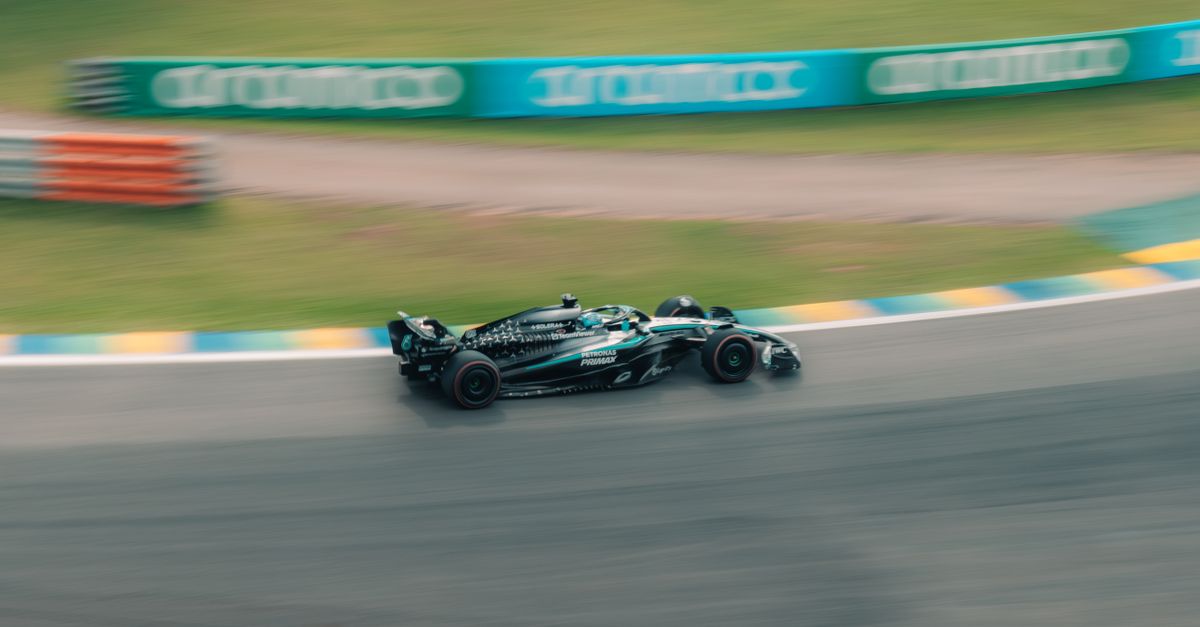
Baku’s strategic chessboard, and the questions F1 can’t keep deferring
There are days when the news cycle hands you one obvious lead story, and there are days like this one, where half a dozen genuinely consequential threads run in parallel and none of them quite drowns out the others. Grid penalties and Saturday racing in Azerbaijan, a Haas driver market finally resolving itself, Aston Martin reportedly circling Ferrari’s number one, Verstappen plotting his post-title-fight life away from the cockpit, and the sport still sitting on an uncomfortable decision about its Middle Eastern finale — this is what a season deep into its politics looks like. Nothing here is small, and taken together it tells you a lot about where Formula 1 is right now: a championship being fought hard on track, while off it the sport quietly rearranges its own furniture for 2026 and beyond.
Baku’s Saturday puzzle and the penalty calculus
Let’s start with the race weekend itself, because the mechanics of it are more interesting than they first appear. Azerbaijan running on a Saturday is a scheduling quirk rather than a philosophical shift — but it has real consequences for how teams think about grid penalties, because it compresses the calendar around it and changes the calculus for exactly the kind of engine-component juggling Ferrari and Mercedes are weighing.
Fred Vasseur’s suggestion that Baku would be a “suitable” venue for Charles Leclerc to absorb a grid penalty is textbook Ferrari pragmatism. Baku’s long straights and heavy braking zones make it one of the easier places to recover positions from a compromised grid slot — DRS trains form, slipstreams are enormous, and a driver of Leclerc’s calibre can realistically climb back through a midfield pack in a way he simply couldn’t at, say, Monaco or Zandvoort. If you’re going to take a hit on grid position to bank a fresh power unit element, you do it somewhere the track layout does some of the recovery work for you. It’s the same logic that’s shaped penalty placement for a decade — Spa and Baku have long been the default “penalty tracks” for exactly this reason.
George Russell’s situation adds a wrinkle worth understanding properly. The reporting here is that any engine change carries what’s being described as a double penalty — not simply the standard grid drop for exceeding component allocation, but a compounding effect tied to how the parc fermé and allocation rules interact with the specific timing of a change at this point in the season. The detail matters because it changes the trade-off calculation entirely: if the penalty cost is effectively doubled, teams need much greater confidence that a fresh unit buys them enough performance and reliability margin across the remaining races to justify starting from the back, rather than nursing what’s in the car now and taking a smaller, better-timed hit later.
Why this matters strategically:
- With the season entering its final stretch, every grid penalty absorbed now is one fewer available later — teams are effectively rationing pain across a shrinking number of race weekends.
- Baku’s overtaking-friendly characteristics make it disproportionately attractive as a “penalty weekend” compared to what’s left on the calendar.
- Mercedes’ calculus around Russell looks more delicate than Ferrari’s around Leclerc precisely because of that double-penalty mechanism — it’s not a like-for-like decision even though the surface-level story (“driver might take grid drop”) reads the same for both.
Ocon’s Haas exit and the widening 2027 picture
Esteban Ocon leaving Haas is the kind of story that looks tidy on the surface — driver moves on, team finds a replacement — but it’s worth sitting with why it matters beyond the immediate seat change. Ocon’s stint at Haas has been a study in a driver rebuilding his market value after a difficult exit from Alpine, and depending on how his replacement situation is framed, this reads either as a natural next step in that rebuild or as Haas recalibrating its own ambitions as it locks in personnel for the 2027 regulation cycle.
That’s the real significance here: 2027 is becoming the reference point for driver contracts across the grid well before it needs to be. Teams are using the new technical regulations — and the uncertainty they inevitably bring — as leverage to lock in stability now, rather than getting caught mid-cycle with an unsettled lineup. Haas making this decision now, rather than waiting for the conventional end-of-year silly season crunch, suggests a team trying to get ahead of a market that’s about to become extremely congested, especially if Ferrari’s situation with Leclerc genuinely is in play.
Aston Martin, Leclerc, and a rumour that deserves scepticism — but not dismissal
The suggestion that Aston Martin have made an approach for Charles Leclerc is the sort of story that detonates a news cycle and deserves to be handled carefully, because the incentives on both sides are real even if the outcome is unlikely.
Consider Aston Martin’s position. They’ve invested enormously in infrastructure — the new factory, the wind tunnel, Adrian Newey’s technical leadership — and that investment has always been framed as building toward a genuine championship-calibre operation. A team with those ambitions and that level of spend inevitably looks at the two or three drivers in the paddock capable of maximising a front-running car, and Leclerc’s name will always be on that shortlist. It would be more surprising if Aston Martin hadn’t at least sounded out the market than if they had.
Consider Leclerc’s position too. He’s spent his entire Ferrari career being simultaneously the team’s emotional centre of gravity and, at various points, its most visibly frustrated driver — strategy calls that haven’t gone his way, championship near-misses, the sense of a driver who has earned a title he hasn’t yet been given the machinery to win. None of that means he wants to leave Maranello. Ferrari is not just a team to Leclerc; it’s the team, and there’s a gravitational pull to that relationship that Aston Martin’s cheque book and Newey’s aerodynamic pedigree can’t easily replicate on reputation alone.
GP Headlines’ take: treat this as smoke rather than fire for now. Approaches happen constantly in F1’s driver market — agents test waters, teams float names, nothing here confirms serious traction. But it’s a useful reminder that Ferrari’s ability to retain Leclerc isn’t a given written in stone; it’s contingent on Ferrari actually delivering the car and the results that make leaving irrational. If 2026 doesn’t bring meaningful progress, this rumour will resurface with considerably more weight behind it.
Verstappen’s endurance racing ambitions, minus Le Mans
Away from the title fight, Max Verstappen continues to build out the second act of his career with characteristic clarity about what he wants and doesn’t want. Ruling out a 2027 Le Mans bid while simultaneously eyeing the Nürburgring and Spa 24-hour races, and reportedly finalising fresh GT3 plans for next year, tells you something about how deliberately he’s sequencing this.
Le Mans is the crown jewel of endurance racing, but it’s also the most logistically and competitively demanding — Hypercar-class entries require manufacturer backing, a completely different discipline of car, and a level of commitment that would genuinely compete with his F1 programme for bandwidth. The Nürburgring 24 Hours and Spa 24 Hours, by contrast, are GT3-based enduros — closer in spirit to what Verstappen has already sampled, less disruptive to his primary Red Bull commitments, and frankly more aligned with his stated love of sim racing and grassroots-adjacent motorsport culture than a full factory prototype programme would be.
This isn’t a driver hedging his F1 future — nothing here suggests any softening of his single-seater ambitions. It’s a driver secure enough in his standing to start building the diversified racing life that Fernando Alonso, among others, has long modelled: F1 as the primary occupation, endurance racing as the passion project that keeps the enthusiasm topped up. Expect this to be a slow-burn story across 2026 rather than one that resolves quickly.
Alonso, “killed” classic tracks, and a veteran’s unfiltered diagnosis
Fernando Alonso’s comments about classic circuits being undermined by current regulations land at an interesting moment, arriving alongside his own ongoing conversations with F1 about his future. Alonso has never been shy about diagnosing the sport’s technical direction bluntly, and this is consistent with a broader grumble that’s been building among veteran drivers for several seasons: that current car characteristics — weight, tyre degradation profiles, the aerodynamic sensitivity to following another car — have changed how the sport’s most storied venues actually race, sometimes for the worse.
It’s worth taking seriously rather than dismissing as veteran nostalgia. Alonso has driven these circuits across multiple regulation eras and has a legitimate basis for comparison that most current observers simply don’t. Whether 2026’s new rules — lighter, more agile cars, active aerodynamics — address this concern remains to be seen, but it’s a useful data point heading into a regulation change that’s being sold partly on the promise of better racing at exactly these kinds of venues.
Qatar, Abu Dhabi, and F1’s reluctance to say the obvious out loud
Perhaps the most structurally significant story today is the one with the least concrete news in it: the ongoing delay in any formal decision on the Qatar and Abu Dhabi Grands Prix given the situation in the Middle East. The assumption has been building for months that cancellation is essentially inevitable, yet nothing has been confirmed, and that gap between assumption and action is itself worth examining.
Commercial rights holders don’t cancel races lightly — there are broadcast contracts, promoter agreements, and calendar logistics that make late-season cancellations genuinely painful to unwind, quite apart from the diplomatic sensitivities of appearing to make a unilateral call on a live geopolitical situation. Lewis Hamilton’s contrarian stance — reportedly pushing back against the assumption that F1 shouldn’t race there at all — adds a genuinely useful counterweight to what’s otherwise been a fairly one-directional media narrative. Whatever your view on the substance, having a senior figure articulate the case for continuity rather than automatic withdrawal is a healthier conversation for the sport to be having than one where the outcome is treated as foregone before it’s actually decided.
The bigger point: F1 is increasingly a sport that races in regions where geopolitical stability can’t be taken for granted, and this is unlikely to be the last time the calendar collides with events far beyond the paddock’s control. How this is resolved — and how transparently — will set a template for future decisions of this kind.
On the radar
- Williams’ Baku upgrade — introduced with real ambition but already facing scepticism from within the paddock; worth watching whether it translates into actual lap time or becomes another false dawn in their recovery story.
- The 2030 engine reports — if naturally aspirated V8s are genuinely off the table, expect a vocal fan and manufacturer reaction; this is a decision with a much longer shadow than most regulation tweaks.
- Antonelli’s driving style fit with 2026 cars — Russell’s comments suggest Mercedes see genuine long-term upside here; a young driver whose technique suits the new regulations before he’s even driven them in anger is a notable early signal.
- Ocon’s next destination — his exit from Haas only tells half the story; where he lands matters more than where he’s leaving.
- Leclerc’s contract status — even if Aston Martin’s approach comes to nothing, the fact it’s being reported at all should sharpen Ferrari’s urgency heading into 2026.
- The Qatar/Abu Dhabi decision timeline — the longer this drags, the more it looks like reluctance rather than deliberation.
None of these stories resolve today, and that’s rather the point of where the season sits. The championship battle remains the main event, but the sport’s next two or three years — its driver market, its regulations, its calendar’s moral geography — are being quietly negotiated in the margins. Baku will tell us plenty about grid strategy this weekend; it’s these slower-burning threads that will actually shape what F1 looks like once the 2026 cars hit the track.