
F1 today: the stories everyone's talking about — 18 Sept 2026
GP Headlines' round-up and analysis of the biggest Formula 1 storylines making news right now.
The paddock’s quiet civil wars
There’s no single dominant story pulling at Formula 1 today so much as a series of small fractures running through the sport — between a driver and a sponsor, between a promoter and its regulator, between a champion team’s engineers and the wider grid, and between an under-fire outfit and its own upgrade path. None of it is existential. All of it is revealing. This is the mid-season version of Formula 1: the title fight sharpening, the also-rans working out what they actually are, and the sport’s administrative plumbing creaking in the background as it always does. Here’s what matters from today’s headlines, and why.
Antonelli’s title fight enters its psychological phase
The Kimi Antonelli story has now split into three distinct threads, and together they sketch out exactly the kind of season a young leader has to survive to be taken seriously as a champion.
First, the tactics. Andrew Shovlin’s explanation of Mercedes’ “secret code” approach around the Spanish Grand Prix’s virtual safety car call is a reminder of something F1 fans routinely underrate: races are won as much in the pre-planned scenario trees as they are on raw pace. Teams rehearse dozens of these situations — VSC deployment windows, pit-loss calculations, rival strategy triggers — so that when the moment comes, the driver isn’t making a cold decision under pressure, he’s executing a pattern he’s already drilled. That Mercedes had a code word ready for exactly the situation that decided the race tells you this wasn’t luck; it was preparation meeting opportunity, which is usually the most reliable definition of good strategy there is.
Second, the psychology. Nico Rosberg’s warning — that Antonelli could get “more and more panicked” if McLaren and Ferrari’s upgrades drag him back into a four-way scrap — is the kind of comment that carries extra weight coming from someone who won a title under similarly intense internal and external pressure. Rosberg knows better than most that leading a championship as a young driver is not simply a pace problem; it’s a nerve problem. The moment a comfortable buffer becomes a knife-edge gap, every small error gets magnified, every strategy call gets second-guessed, and the sport’s ecosystem of second-guessers — us included — starts hunting for cracks. If Mercedes’ rivals do close the gap through upgrades, the coming months become as much a test of Antonelli’s temperament as his talent.
Third, the future. Antonelli’s admission that he won’t rule out a Ferrari move, while stressing loyalty and timing, is calculated candour rather than a red flag for Mercedes. Every young driver at a top team gets asked this question, and the smart ones — Antonelli included, on this evidence — answer it honestly enough to avoid looking evasive, while making clear nothing is imminent. Given Ferrari’s well-documented chaos this year (more on that below), it’s hard to see this as anything more than a polite acknowledgement that Maranello is the sport’s most storied seat, not a hint of actual movement.
GP Headlines’ take: the Rosberg warning is the one to watch. Mercedes has the strategic infrastructure to support Antonelli, as Spain showed. What nobody can drill in advance is composure when the gap disappears — and if this title fight tightens as expected, that’s where it’ll be decided.
Ferrari’s soap opera has a new episode, and it’s not really about Hamilton
Lewis Hamilton batting away suggestions he’s been agitating to reshape personnel inside Ferrari is, on its own, a fairly minor story — the kind of denial that will satisfy nobody who’s already decided what they think happened. But it lands against a backdrop worth remembering: a “more positive” recent run for Hamilton at Ferrari after what has been, by any measure, a difficult opening season in red. The fact that outlets are now debating whether his adaptation deserves a “truly remarkable” verdict shows how quickly narratives can flip in this sport — from crisis talk to redemption arc within the space of a few race weekends.
The uncomfortable truth for Ferrari is that neither story — the struggles nor the recovery — really settles anything about the team’s underlying condition. A driver of Hamilton’s calibre finding more comfort with the car, the operation and the demands of Maranello is good news regardless of what caused the rockier start. But a swirl of stories about personnel friction, whether true or not, doesn’t happen around a team that’s functioning smoothly. Ferrari has spent much of the modern era being its own worst enemy in exactly this way: not through lack of resource or talent, but through an inability to keep the narrative around the team calm even when results are trending upward. If Hamilton’s form really is improving, the healthiest thing Ferrari can do now is let that improvement speak for itself rather than continuing to generate stories that invite scrutiny of the dressing room.
Norris, Coca-Cola and Steiner’s blunt verdict
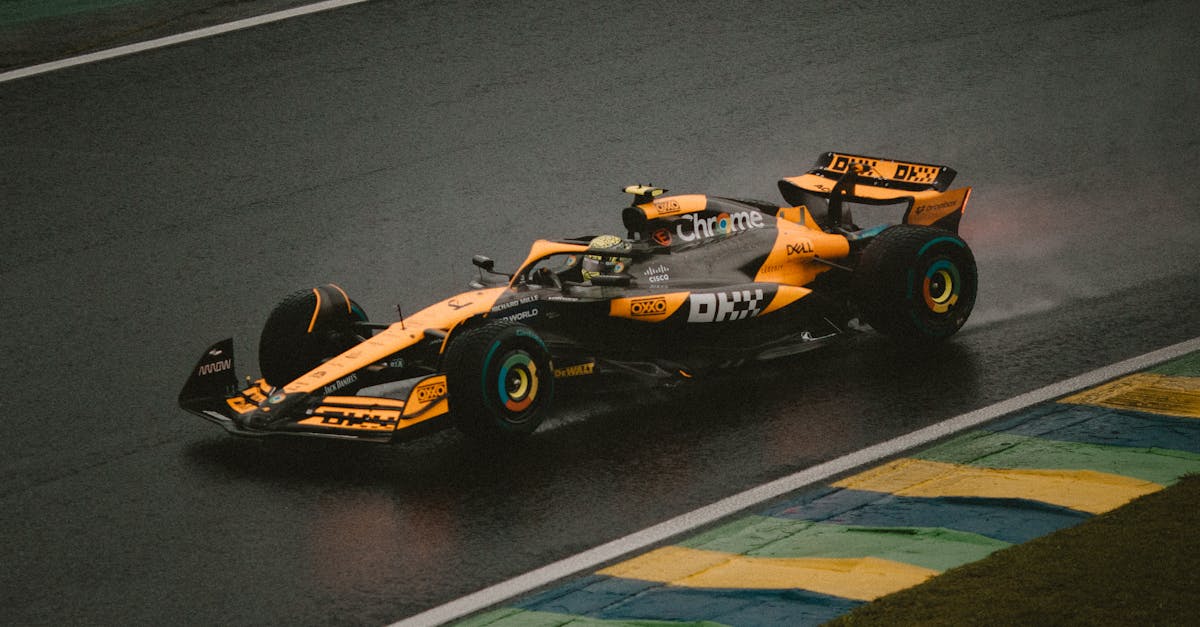
Guenther Steiner isn’t a man who tends to manufacture opinions for effect, which is what makes his criticism of Lando Norris over the Coca-Cola sponsorship spat following the Spanish Grand Prix worth taking seriously rather than dismissing as paddock noise. Steiner’s currency, built over years running Haas and now as a pundit, is candour delivered without theatre — he says what he thinks a team boss would think, and usually what a fair chunk of the paddock is thinking too.
The specifics of a driver-sponsor flashpoint matter less than the pattern it fits into. Modern F1 drivers operate under an extraordinary weight of commercial obligation — trackside activations, partner content, podium protocol — layered on top of the actual job of extracting performance from a car at the limit of adhesion. Friction with sponsors is not new; what’s changed is the scrutiny, with every interaction now clipped, shared and dissected within minutes. Norris has generally handled the growing commercial and media burden of being a genuine title protagonist with good grace, so a moment of visible frustration is more likely a symptom of pressure than a character flaw. But Steiner’s broader point — that there’s a standard of professionalism expected regardless of how a driver is feeling in the moment — is one most senior figures in the paddock would quietly endorse, even if few would say it as bluntly as he has.
Vowles’ honesty about Williams is the story Williams needs told
There’s something almost refreshing about a team principal saying, in as many words, that the remaining upgrades for the season won’t be enough to fix things. James Vowles has built his short tenure at Williams on exactly this kind of transparency — a deliberate contrast with the sport’s default mode of relentless optimism regardless of results — and today’s admission fits that pattern precisely.
It also matters practically. Williams’ 2026 struggles, under a regulation set that has reshuffled the competitive order across the grid, aren’t a one-upgrade problem; they’re structural, tied to how the car’s fundamentals were conceived for a very different rulebook reality than the one it’s now racing in. Vowles has been here before, inheriting a team in 2023 with infrastructure gaps that took years to address rather than months. His willingness to say “this won’t be enough” rather than promise an imminent turnaround is, in a strange way, a sign of a well-run operation: it manages expectations internally and externally, and it signals that Williams’ actual priority is next year’s car rather than chasing marginal, season-saving fixes now.
The wider read
Williams’ honesty stands in useful contrast to teams that oversell upgrade packages and then absorb the credibility hit when they underdeliver. Vowles is betting that a reputation for straight talk is worth more long-term than a few weeks of false hope — and given how far Williams still has to travel back to the sharp end, that looks like the right bet.
The governance undercurrent: FIA, WEC and the ACO
Away from the cars, the reported rift between the FIA and the WEC’s promoter — with the ACO’s stewardship of Le Mans now caught up in the same contractual dispute — is the kind of story that rarely grabs headlines in proportion to its actual importance. Endurance racing’s global championship and its centrepiece race operate on a web of agreements between governing body, promoter and organiser that most fans never think about until a dispute threatens to disrupt them. The FIA’s decision to issue statements on both the general rift and the specific Le Mans question suggests this has moved from paddock rumour to something the governing body feels needs managing publicly — which is usually the point at which these disputes are closer to resolution than to rupture, if only because neither side benefits from public instability around one of motorsport’s genuine crown jewels.
It’s a reminder that F1’s governance dramas — the budget cap disputes, the sprint format arguments, the engine regulation politics — are part of a much larger pattern across the FIA’s portfolio, and that the same tensions between commercial promoters and the regulator playing every category off against the other show up wherever motorsport tries to balance sporting integrity against business interests.
Human stories: sacrifice, survival, and sport beyond the results sheet
Two stories today are worth flagging simply because they cut through the tactical and commercial noise to something more fundamental. Franco Colapinto’s reflection on the sacrifices his family made to get him to F1 is a useful corrective every time the sport’s extraordinary costs of entry get discussed in the abstract — behind every driver on the grid who didn’t arrive via a factory junior programme is usually a family that gave up something significant to make it possible.
Ollie Millroy’s account of a horrific crash and rescue, and the scale of injuries he’s come through — broken ribs, collarbone, hand, a punctured lung — is the kind of story that should temper any tendency to treat motorsport’s dangers as a solved problem. Safety in racing has improved immeasurably, but incidents like this are the evidence that the margins the sport now takes for granted were built, and continue to be maintained, at real physical cost to the people who race.
On the radar
- Cadillac’s ownership cloud: a class-action lawsuit against Mark Walter and TWG Global, alongside a separate fraud investigation, is a background legal story for now but worth tracking given Cadillac’s imminent grid entry and the scrutiny new owners inevitably attract.
- Ferrari’s 2027 sponsorship coup: signing a brand previously linked to a McLaren title deal is a small but symbolic win for Maranello’s commercial operation amid the on-track noise.
- Sprint format fatigue: the RaceFans reader comment on switching off over sprint weekends reflects a live and unresolved debate about format fatigue that F1’s owners will need to address before it hardens into a broader audience problem.
- McLaren and Ferrari’s upgrade trajectories: the pace at which both close on Mercedes will be the single biggest determinant of how the Antonelli title fight actually unfolds from here.
- Williams’ 2027 direction: with 2026 effectively conceded as a rebuilding year, attention now shifts to how much of Vowles’ promised structural progress shows up in next year’s car.
The throughline across today’s stories is one of a sport managing pressure on every front at once — competitive, commercial, psychological and administrative — and mostly doing it in public. That transparency, however uncomfortable for those involved, is generally a healthier state for F1 than the alternative.