
F1 today: the stories everyone's talking about — 9 Aug 2026
GP Headlines' round-up and analysis of the biggest Formula 1 storylines making news right now.
Formula 1’s extended summer shutdown was supposed to be the quiet week. Instead, the paddock rumour mill has spun faster than a DRS zone on the Kemmel straight, with driver market intrigue, championship psychology and the sport’s own rulebook all generating genuine debate. Eleven rounds into the 2026 season, the picture is clearer than it was in winter — Mercedes have been the class of the field, Ferrari and Lewis Hamilton are stalking them, and the midfield is being reshaped by a new technical era — but clarity hasn’t dampened the noise. If anything, it’s sharpened it.
Sainz’s next move: Williams or Audi?
Carlos Sainz’s situation remains the most compelling piece of unfinished business on the grid. Reports of talks with Williams have surfaced just as Mattia Binotto has been forced to address — and gently deflect — persistent chatter linking the Spaniard to Audi. Binotto’s response, essentially that it’s an obvious storyline to write rather than a confirmed negotiation, is the classic team-principal hedge: not a denial, not a confirmation, just enough ambiguity to keep the door open without tipping his hand.
What makes this genuinely interesting rather than routine silly-season filler is the strategic logic on both sides. Williams, under James Vowles, have been quietly rebuilding a technical and operational culture that’s started to bear fruit; a driver of Sainz’s calibre — meticulous, technically fluent, a proven race-winner — would be a statement of intent rather than a stopgap. Audi, meanwhile, are entering the sport as a full works outfit with the kind of long-term ambition that requires exactly the sort of experienced, adaptable driver who can help shape a car and a team culture from the ground up, much as Sainz did in different ways at Renault, Ferrari and now wherever he lands next.
The honest answer is that nobody outside those boardrooms knows which is closer to being real. But the fact that two credible destinations are being discussed in parallel tells you something about how Sainz is now valued in the market: not as a driver defined by his time alongside a generational teammate, but as a proven, self-sufficient race winner in his own right. That’s a reputation he’s earned the hard way, and it’s exactly the kind of asset either Williams or Audi could use.
Mercedes’ dominant lead, and the cracks Russell can see
Eight wins from eleven rounds is the kind of return that would normally settle a championship conversation by August. Yet George Russell’s message — pointedly warning against complacency — is the mark of a driver who understands how quickly momentum can evaporate in this sport, particularly at a point of major regulation change where development gradients are still steep and unpredictable.
Russell’s instinct is well founded, and not just as generic sporting caution. Reports of looming engine penalties for both Russell and Andrea Kimi Antonelli later in the season represent a real and quantifiable threat to Mercedes’ points advantage, and it’s precisely the kind of variable that can hand momentum to Ferrari and Hamilton at exactly the moment it matters most. Grid penalties don’t just cost points in isolation; they disrupt strategy, force cars through traffic they’d otherwise avoid, and create the kind of compounding bad weekends that can turn a comfortable championship cushion into a nervy run to the flag.
Why this matters for the title picture
- Mercedes’ points lead has been built on consistency as much as outright pace — the kind of lead that erodes gradually rather than collapsing suddenly, which is exactly why Russell is right to flag it now rather than wait for the erosion to become visible in the standings.
- Any power unit penalty is amplified in 2026’s new technical era, where the aerodynamic and hybrid trade-offs are still being understood; losing grid positions on a circuit where overtaking is hard could be costlier than in years past.
- Hamilton’s Ferrari form has been building steadily rather than explosively, and a favourable penalty swing is the sort of external gift that can turn a “nearly” title bid into a genuine one.
RaceFans’ reader poll asking which of Antonelli’s rivals poses the biggest championship threat is a neat encapsulation of the moment: it’s no longer obviously Russell, his own teammate, given the penalty cloud hanging over him. Hamilton’s resurgence — and we’ll come to the substance behind it — makes him the more interesting answer than it might have looked in the spring.
Hamilton’s quiet resurgence — and the noise around it
It says something about where Hamilton’s stock currently sits that even his off-track life is being read as a title-fight subplot. A new puppy, time with his partner, a message to fans during the break — none of it is remarkable in isolation, but it fits a broader narrative of a driver who looks settled, recalibrated and considerably more comfortable in his own skin than he did in a difficult first season at Ferrari.
That’s the context that makes RacingNews365’s report on the “factor nobody talks about” behind his improved form worth taking seriously rather than dismissing as puff. Adaptation at a new team, especially one with as much history and internal expectation as Ferrari, is rarely just about the car. Confidence, working relationships, and the accumulated small trust-building moments between a driver and his engineers tend to matter more than any single technical tweak — and those things take time that a difficult debut season simply doesn’t allow for.
The lighter stories — the “ridiculous clothing” anecdote and Otmar Szafnauer’s amused observation about Hamilton’s habits — are worth a mention precisely because they round out the picture GP Headlines readers will recognise: a driver whose personality and individuality have never been in question, but whose competitive sharpness is now visibly returning alongside it. Paired with the potential penalty swing against Mercedes, it’s not hard to see why Ferrari’s title hopes are being talked up with more conviction than at any point since Hamilton’s move was announced.
2026’s cars: adaptation, criticism and the FIA’s next headache
Gabriel Bortoleto’s pushback against the idea that this year’s cars are fundamentally clashing with certain driving styles is a refreshingly grounded take amid a wider debate about whether the new regulations have delivered on their promise. His argument — that top-level drivers should be able to adapt to whatever machinery they’re given — is hard to disagree with in principle; adaptability has always been part of the job description at this level, and every regulation reset in F1’s history has produced winners and strugglers who eventually found their footing.
But Bortoleto’s comments don’t exist in a vacuum. RaceFans’ featured debate on whether F1 has failed to promote quality racing is asking a fair and slightly uncomfortable question at the heart of this new electric-heavy era: it’s one thing for drivers to adapt to the cars, and quite another for the racing product itself to be consistently compelling for those watching. Both things can be true simultaneously — drivers rising to the challenge of trickier, more energy-management-dependent machinery, while the racing itself remains a work in progress as teams and the FIA feel their way through an unusually disruptive rules cycle.
Then there’s Nikolas Tombazis’s confirmation that the FIA wants to push cars lighter still in future revisions. It’s a sensible ambition in isolation — nobody in the sport disputes that F1 cars have become uncomfortably heavy over the past decade, to the detriment of both racing and the sport’s environmental narrative — but the practical headache is real. Weight-saving at this level isn’t free; it means finding budget-cap-constrained margins in materials and packaging that teams have already picked clean, and it will inevitably reward those with the deepest simulation and manufacturing capability. Expect the bigger outfits to publicly welcome the direction while quietly working out how to weaponise it against smaller rivals who can’t absorb the development cost as easily.
The midfield: Alpine’s recovery, Aston Martin’s painful reset
Alpine’s half-season story is one of the more encouraging subplots of 2026. After a genuinely difficult 2025, a return to genuine midfield competitiveness is meaningful progress, but PlanetF1’s framing of what comes next as a “development war” is the right one. Being competitive in August means little if the upgrade path stalls into autumn; the teams around Alpine in the midfield pack are all resourced well enough to leapfrog a rival that stands still. Sustaining this recovery, rather than merely achieving it, is now the real test of the operation Alpine have rebuilt.
Aston Martin’s situation is a useful counterpoint. The new Honda partnership has been, by their own admission, a difficult beginning — and it would be surprising if it weren’t, given the scale of technical integration required at the start of a new power unit era. What’s notable is Adrian Newey finding an “unexpected positive” within that disastrous start. Read charitably, that’s the sign of an organisation using early pain to properly understand a new platform rather than papering over problems — exactly the sort of foundational work that tends to pay dividends a year or two down the line, even if it does nothing for the current points tally.
McLaren’s evolution continues
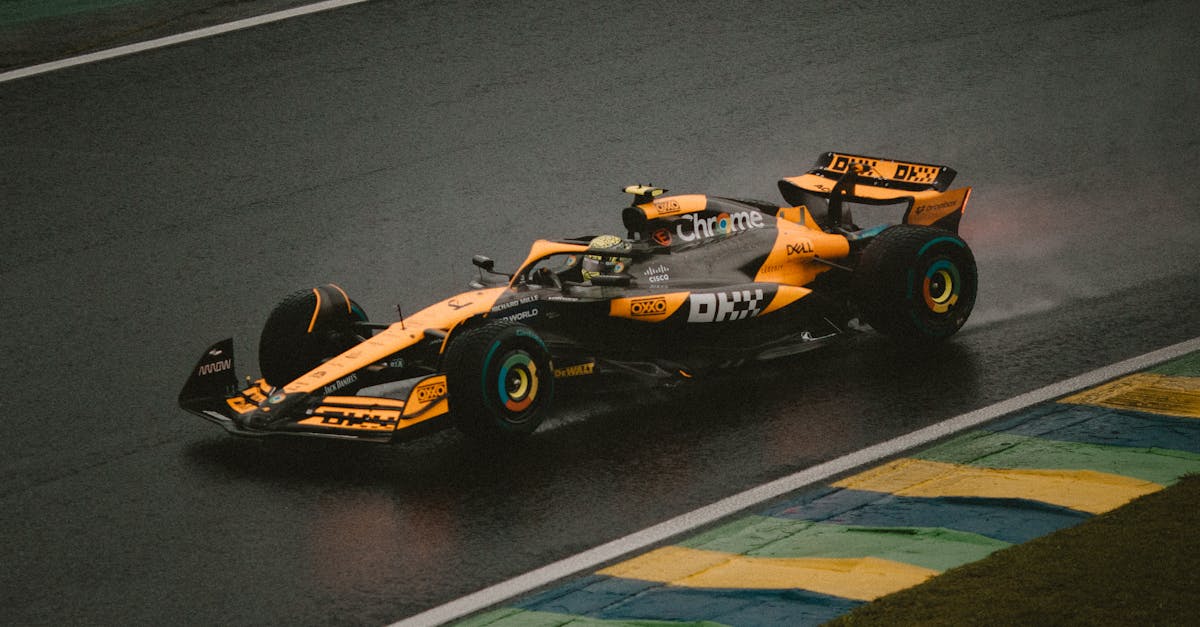
RacingNews365’s report of a “major change” signalled by a senior McLaren figure is a reminder that even a team currently at or near the top doesn’t stand still by accident. McLaren’s rise over the past decade has been built on repeated internal reinvention — structurally, culturally, technically — rather than a single fix, and any further evolution now is about consolidating that position rather than chasing it. For a team that knows exactly how painful stagnation can be, that restlessness is precisely the point.
On the radar
- Whether Williams or Audi moves first and formally on Sainz — the timing of any announcement will say as much about their confidence as the deal itself.
- How Mercedes manage the scheduling and strategic fallout of the reported Russell and Antonelli engine penalties.
- Ferrari’s upgrade trajectory alongside Hamilton’s form — the car needs to keep pace with his renewed sharpness.
- Whether Alpine can convert midfield form into a genuine upgrade race rather than a plateau.
- The FIA’s next steps on minimum weight, and which teams lobby loudest either way.
- Aston Martin-Honda’s in-season progress curve as the partnership beds in beyond its rocky start.
GP Headlines’ take: the summer break has done nothing to cool this season down — if anything, it’s exposed how many genuinely open questions remain. Mercedes are still favourites, but Russell’s caution looks shrewd rather than paranoid, and Hamilton’s rebuilt confidence at Ferrari makes him the most credible threat to that dominance. Further down the paddock, the real story is adaptation: to new machinery, new power units, and a market where even proven race winners like Sainz can’t take their next seat for granted.