
F1 today: the stories everyone's talking about — 13 Jul 2026
GP Headlines' round-up and analysis of the biggest Formula 1 storylines making news right now.
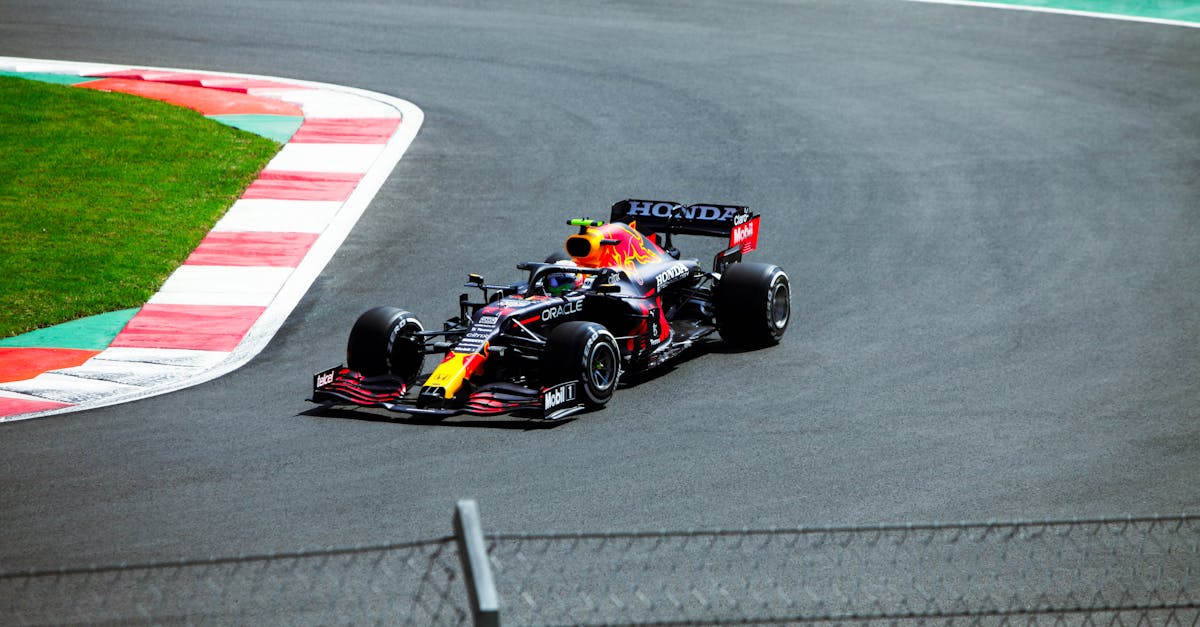
Silverstone’s afterglow: Red Bull’s unrest, Mercedes’ warning shot, and a title race finding its shape
There’s a particular kind of quiet that descends on the paddock the week after a British Grand Prix — engineers back at the factories poring over data, drivers scattered across the world’s classic car events, and the news cycle left to digest what Silverstone actually told us about the shape of this season. What it told us, on this Monday’s evidence, is that 2026’s championship battle is genuinely unresolved at both ends of the grid: at the front, Mercedes are being warned not to relax even as they sit one-two; at Red Bull, the uncomfortable truth is that patience is wearing thin in both directions, driver and team alike. Layer in Ferrari’s 250-win anniversary reflections, McLaren’s ongoing management of its own internal dynamic, and a genuine changing-of-the-guard story in the junior ranks, and you have a paddock that is politically as interesting as it is competitively tight.
Verstappen’s frustration and the question of fair criticism
The line doing the rounds — a former F1 figure questioning how Max Verstappen can complain about Red Bull’s struggles with the RB22 — cuts to something that’s been building for months rather than a single flashpoint. Verstappen’s relationship with his own machinery has always been unusually transparent; he says what he thinks on the radio and in the paddock, and for years that bluntness was easy to defend because the car was usually good enough to back it up. The RB22, by every indication this season, has not consistently been that car, and the friction that creates is different in kind from the mid-season grumbles of the dominant years.
The criticism levelled at him — essentially, that a four-time champion complaining about a car that has still delivered wins and podiums this year needs to keep some perspective — is worth taking seriously rather than dismissing as punditry noise. There’s a case that Verstappen’s frustration, however justified by the car’s shortcomings relative to its rivals, risks curdling into something that unsettles a Red Bull operation which is clearly not firing on all cylinders technically. Drivers pushing publicly for answers can be a useful pressure valve for a team; it can also become corrosive if it starts to look like blame-shifting.
But the counter-argument matters too: Verstappen has built his entire career on refusing to accept mediocrity, and a driver of his calibre calling out a regression is precisely the kind of internal accountability that has historically made Red Bull sharper, not weaker. The question isn’t whether he should feel frustrated — clearly the car has given him reason to — but whether the tone and timing of that frustration is helping or hindering a team trying to solve a genuine technical deficit. That’s a harder thing to adjudicate from the outside than a soundbite allows, and it’s why this story will keep resurfacing every time the RB22 underperforms.
Hadjar’s rise changes the internal conversation
What makes Red Bull’s situation more textured is Isack Hadjar’s form alongside him. Where Verstappen’s predecessors at Red Bull — the long line of team-mates who found themselves comprehensively outclassed — largely faded from the conversation, Hadjar’s progress at Silverstone earned praise from his own team principal and represents something Red Bull hasn’t had in years: a second driver actually putting up a fight rather than making up the numbers. That’s significant for two reasons. First, it gives Red Bull genuine comparative data on whether the RB22’s problems are car-wide or specific to how Verstappen is trying to extract performance from it. Second, it changes the political dynamic — a team with a credible second driver has more room to manage its number one than a team that’s utterly dependent on him, which may explain some of the more assured tone from Red Bull’s management even amid the on-track struggles. Hadjar learning directly from Verstappen’s methods, as has been described, is exactly the kind of internal development story that can pay dividends for Red Bull long after this season’s car issues are resolved one way or another.
Mercedes’ warning shot and the Hamilton subplot
Toto Wolff’s message to Kimi Antonelli — don’t get complacent, because the job isn’t done — reads as smart management of a rookie who suddenly finds himself part of a one-two atop the drivers’ standings and helping deliver Mercedes’ lead in the constructors’ table. There’s an obvious temptation for any young driver in that position to start believing the hard part is behind him. Wolff’s intervention is the kind of proactive, unglamorous man-management that championship-winning teams do quietly and well — reminding a title-contending rookie that consistency across a full season, not a strong run of results, is what actually wins championships.
The context that makes this pointed rather than routine is the parallel narrative of Lewis Hamilton’s form. The suggestion that Hamilton is “coming” — closing in on the Mercedes duo from a Ferrari seat he’s still adapting to — deserves a measured read rather than breathless amplification. Hamilton’s move to Ferrari was always going to take time to bed in fully, both technically and in terms of the working relationship with a new team, and any signs of him finding form and momentum are entirely predictable rather than surprising. What it does do, legitimately, is inject urgency into Mercedes’ title defence. A Hamilton who is trending upward through the season is a fundamentally different threat to one who’s plateaued, because it suggests the trajectory — not just the current gap — favours him. Wolff’s timing in warning Antonelli against complacency looks less like a generic bit of coaching and more like a considered response to that trend line. Whether Hamilton can sustain the improvement across the remaining rounds is the open question that will define how seriously this “threat looms” framing should be taken by Silverstone or Spa.
It’s also worth remembering the emotional undercurrent here: Hamilton racing his way back into title contention against the team he left, with his former boss now issuing warnings about him, is a storyline F1 doesn’t need to manufacture — it’s simply there, and it will only intensify if the form holds.
McLaren’s quiet management job
Mark Webber’s response to swirling rumours about Oscar Piastri’s future at McLaren is the kind of story that matters more for what it signals than for any single detail. Managers don’t typically need to publicly address speculation unless that speculation has enough currency to be worth killing off directly. McLaren have built their championship-contending package on the back of a genuinely harmonious two-driver system with Piastri and Lando Norris, and any suggestion of instability in that arrangement is worth McLaren’s management taking seriously — not because there’s necessarily fire behind the smoke, but because perception of internal tension can become self-fulfilling in a title fight. Webber, as a former driver who understands exactly how corrosive an unsettled team-mate dynamic can be to a championship campaign, is well placed to shut this down early and firmly. The wider point is that McLaren currently has the strongest package on the grid and the most to lose from a self-inflicted political wobble — expect this to be a running theme that resurfaces whenever contract or form headlines create a vacuum for speculation.
Norris’s remarkable consistency
Amid the noise, it’s worth pausing on a number that’s easy to skim past: Lando Norris becoming only the sixth driver in history to make Q3 in 40 consecutive Grand Prix weekends. This is not a headline-grabbing statistic in the way a win or pole is, but it’s arguably more revealing of genuine class. Qualifying consistency at that level, sustained across changing regulations, tyre compounds, and circuit types, speaks to a driver and team who have eliminated the unforced errors that undo lesser campaigns — the scrappy Q2 exit, the traffic-compromised lap, the set-up gamble that doesn’t pay off. Company at that mark tends to include the era’s genuine greats, and Norris’s presence among them is a quiet but important data point in assessing where he sits in the current pecking order relative to Verstappen, Piastri and now a resurgent Hamilton.
Ferrari’s 250 wins and the weight of history
Ferrari’s reflection on ten of their most iconic victories from a 250-win record, spanning 41 drivers across 75 years, lands at a moment when the team is once again a live entity in the sport’s present tense rather than purely its past. It’s a useful reminder, amid the daily churn of this season’s storylines, that Ferrari’s brand in Formula 1 has never rested solely on current competitiveness — it’s sustained by a depth of history that no rival can match. But there’s a sharper edge to the timing too: with Hamilton now in red and reportedly finding form, Ferrari have an opportunity to add a genuinely significant new chapter to that anniversary story rather than simply commemorating old ones. The gap between celebrating 250 wins and adding win 251 with a seven-time champion is the story Ferrari would clearly rather be telling by season’s end.
On the radar
- Tsolov’s F2 form — Red Bull’s junior programme has a driver being talked up as deserving an F1 opportunity; worth tracking how quickly that translates into concrete chances given Red Bull’s current seat pressures.
- Lawson’s Goodwood moment — a reminder that the Festival of Speed remains a genuine highlight for drivers connecting with motorsport heritage, this time through a piece of New Zealand history that visibly moved him.
- WEC at Interlagos — the Six Hours of São Paulo result is a reminder that the broader endurance landscape keeps rolling regardless of F1’s news cycle, and worth a look for crossover interest given several F1-adjacent manufacturers’ involvement.
- Antonelli’s title-race temperament — how the rookie responds to Wolff’s warning, in results rather than words, will be one of the more instructive sub-plots of the coming rounds.
- Anthony Hamilton’s car sale — a £3million classic collection hitting the market is a minor story in isolation, but a nice human-interest thread running alongside his son’s on-track resurgence.
- The championship poll question itself — four different winners in four rounds is a healthier sign for competitive balance than any single dominant storyline, and it’s genuinely unclear yet who’s best placed to convert that chaos into a title.
The takeaway: Silverstone didn’t hand us a clear championship leader’s manifesto — it handed us a paddock with unresolved tension at Red Bull, a Mercedes management team taking Hamilton’s revival seriously enough to coach against complacency, and a McLaren camp having to publicly reassure everyone that its title-winning harmony is intact. None of these stories are crises yet. All of them are worth watching closely, because in a season this competitively tight, it’s the off-track management of pressure — not just raw pace — that’s shaping up to decide where the titles land.