
Hungarian Grand Prix preview: what to watch at Budapest
Everything to look out for ahead of the 2026 Hungarian Grand Prix.
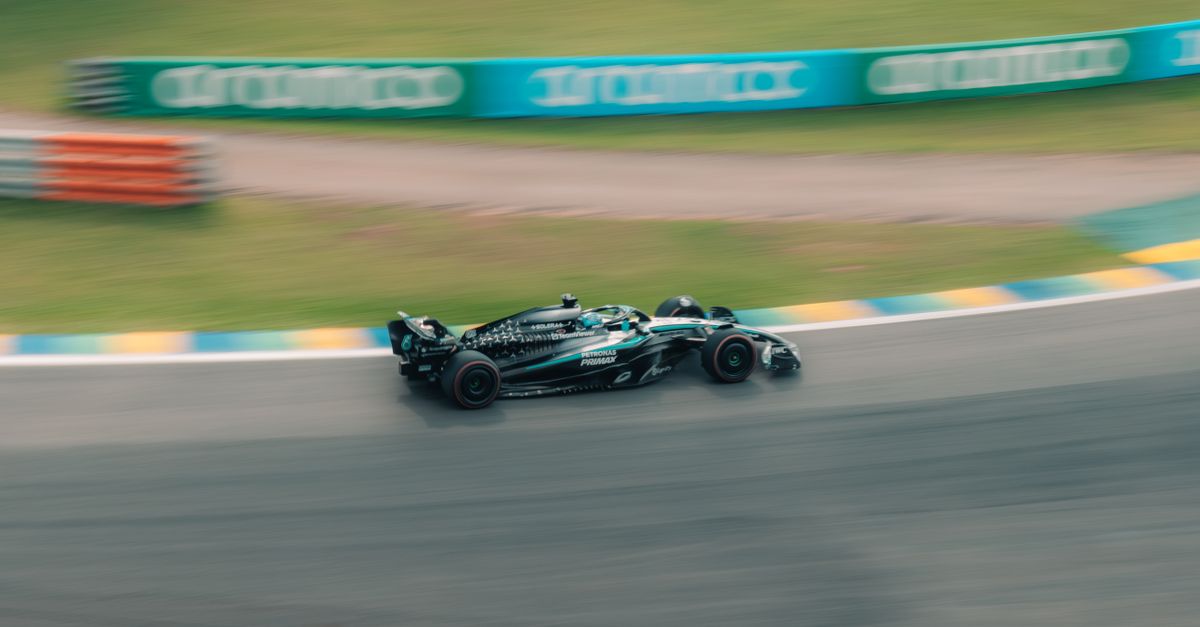
2026 Hungarian Grand Prix Preview
Formula 1’s summer swing towards its August break lands, as it so often does, at a circuit that owes nothing to the rest of the calendar. The Hungaroring is tight, twisty and dusty, a track more associated with Monaco-style precision than the power-sensitive layouts that have dominated the last few rounds. With Andrea Kimi Antonelli holding a healthy but not unassailable lead in his title fight with Lewis Hamilton and George Russell, and Charles Leclerc and Lando Norris both needing something to change if they’re to stay in the conversation, this is a weekend where track character could matter as much as raw form.
Circuit characteristics
The Hungaroring is often described as “Monaco without the walls” — a fair shorthand, though not a complete one. At just under 4.4km and comprising 14 corners, it’s a low-speed, high-downforce circuit where momentum is built through a rhythm of medium and slow corners rather than any single defining feature. There’s no long straight to speak of; the closest thing, the run down to Turn 1, is short enough that overtaking under braking has traditionally been difficult without a significant pace differential or a slipstream assist from DRS.
That has long made Hungary a qualifying-critical race. Track position is king, and with the field so often bunched up by strategy rather than raw pace, the race can become a procession unless something disrupts the order — a Safety Car, a well-timed strategic gamble, or changeable conditions. The circuit’s abrasive, dusty surface (a product of relatively low usage across the year and a track that sits in something of a natural bowl) also means grip evolves sharply across a weekend, particularly if rain arrives on Friday or Saturday and washes away the rubber laid down.
Tyre degradation tends to be moderate rather than extreme, but traction is a genuine differentiator — several of the slower corners open onto short straights where getting the power down cleanly matters, and cars that snap or scrabble on exit will bleed lap time all race long. Downforce level is towards the maximum teams will run all season, closer to Monaco and Singapore than to Monza or Spa, so this is a weekend where mechanical grip, suspension compliance over the bumps, and a driver’s feel for a car rotating on the way into slow corners come to the fore. Historically, it’s a circuit that rewards the complete package — car and driver — rather than one that flatters raw horsepower.
The championship picture
Antonelli arrives with 204 points, a lead of 45 over Hamilton in second and 50 over Russell in third — a gap that’s meaningful but far from decisive with the season’s second half still to play out. It’s the kind of cushion that allows for a bad weekend without panic, but not one so large that it permits complacency, particularly at a track where a strong qualifying lap from a title rival could easily convert into a race win given how hard passing can be.
Hamilton’s position as closest challenger is notable in itself — at a circuit where he has enjoyed some of the finest afternoons of his career, precision and rhythm through slow corners have historically been among his greatest strengths. If there’s a venue on the calendar where he might look to close in on Antonelli rather than simply defend points, this could be it. Russell, just five points further back, is very much still part of this conversation rather than a distant third; a strong result here keeps him within a genuine shout heading into the break, while anything that goes wrong for either of the two ahead of him could pull him back into the heart of the fight.
Further back, Leclerc’s 126 points leave him needing more than incremental gains — the deficit to the top three is substantial enough that only a shift in competitive order, rather than routine points-scoring, will keep Ferrari’s championship hopes credible. Norris, on 103, faces a similar reality: this is a race where he needs to start banking bigger results rather than simply following the leaders home, or the gap risks becoming academic well before the season’s final flourish.
Ones to watch
Antonelli’s handling of pressure will be the central story regardless of where he qualifies or finishes. Leading a championship as a relatively new frontrunner brings a different kind of scrutiny to chasing one, and a low-overtaking circuit like Hungary is precisely the sort of venue where a single mistake in qualifying can cost track position that’s near-impossible to recover across the race. How he manages Saturday, not just Sunday, will say plenty about his title credentials.
Hamilton is worth watching for the opposite reason. A driver who has historically thrived on the technical demands of this lap arrives as the closest challenger with genuine momentum behind him. If he’s able to convert one-lap pace into pole position, Hungary’s low-overtake nature could work firmly in his favour rather than against him — this is a track where being fastest on Saturday often matters more than being fastest on Sunday.
Russell’s weekend is worth following for what it might do to the shape of a three-way fight rather than a two-way one. He’s close enough in the standings that a strong result doesn’t just help him — it changes the calculus for both Antonelli and Hamilton, who can’t afford to race each other in isolation while Russell quietly banks podiums.
And for Leclerc and Norris, this is a race about intent as much as points. Both need to demonstrate — to their teams as much as to onlookers — that they retain a credible path back into title contention before the sport pauses for its summer break. A flat weekend here, on a track where scrappy midfield races are common, would raise harder questions than a single bad result usually would.
What to watch for
- Qualifying pace as the likely key to the entire weekend, given how difficult overtaking traditionally is around the lap
- Whether changeable Hungarian weather intervenes, given the circuit’s tendency for grip levels to shift sharply if rain arrives during a session
- How Antonelli manages the pressure of defending a lead at a track that punishes small errors more than most
- Whether Hamilton’s historical affinity with the circuit’s rhythm translates into a genuine qualifying and race threat
- Russell’s ability to stay embedded in the title picture rather than fall into a supporting role
- Any sign of Ferrari or McLaren finding the step needed to drag Leclerc or Norris back into serious contention before the summer break
The takeaway
Hungary rarely produces fireworks by accident — it demands that teams and drivers create their own, whether through a bold strategy call, a scrappy midfield battle, or a mistake under pressure at the front. With Antonelli defending a lead that’s real but not commanding, and Hamilton looking every bit the challenger at a circuit built for his strengths, this has the makings of a weekend where Saturday afternoon matters just as much as Sunday’s chequered flag.