
Mercedes' Baku Form Signals Genuine Title Threat as Russell Sets the Pace
Russell's dominant one-two in both Friday sessions raises questions about Mercedes' championship credentials heading into the Azerbaijan GP.
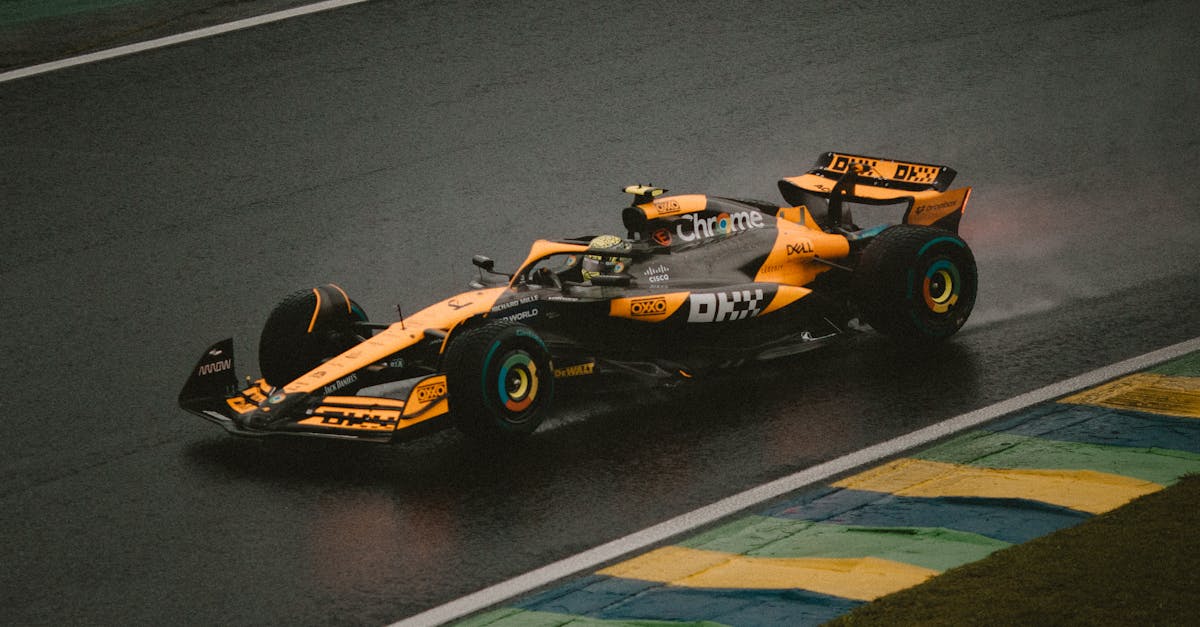
Two Mercedes cars, two sessions, one driver setting the tone throughout: George Russell’s clean sweep of Friday practice at the Baku City Circuit is the kind of statement that makes rivals sit up, even allowing for all the usual caveats about Friday form. With team-mate Kimi Antonelli — the championship leader heading into this weekend — unable to get near him in FP2, the question being asked in the paddock is no longer whether Mercedes have a good car this weekend, but whether they have the best car full stop.
A dominant day, with subplots
Russell’s day followed a familiar pattern for anyone who has watched him mature into Mercedes’ clear reference point over the past couple of seasons: quietly efficient in FP1, then emphatic in FP2, when the sport’s long-run and low-fuel data actually starts to mean something. He topped both sessions comfortably, and did so with Antonelli — no slouch, and currently leading the drivers’ standings — unable to close the gap in the afternoon running. For a team-mate pairing to be split by outright pace on a Friday isn’t unusual; for the gap to be as clear as it appeared to be around Baku’s unforgiving walls is more notable, because this is a track that punishes hesitation and rewards a driver who trusts the platform beneath him.
The session wasn’t without its distractions elsewhere. Lewis Hamilton has been summoned to the stewards over an impeding incident involving Liam Lawson, a reminder that Baku’s mix of long straights and blind approaches to the braking zones makes traffic management one of the trickiest arts of the weekend — cars closing at big speed differentials on a circuit with precious few places to bail out safely. Further up the timesheets in terms of drama, Arvid Lindblad added to what’s becoming an uncomfortable pattern of practice incidents, crashing again in a session that has otherwise been defined by Mercedes’ pace. None of that takes anything away from what Russell and Antonelli produced at the front, but it’s a useful reminder that Baku Fridays are rarely tidy affairs — walls are close, grip is evolving lap by lap as the track rubbers in, and practice running is as much about survival and data-gathering as it is about hero laps.
Why this matters beyond a Friday headline
It would be easy — and wrong — to treat any single Friday as decisive. Practice pace at Baku is notoriously slippery to read: fuel loads vary, engine modes get turned up and down without anyone outside the garage knowing, and low-grip surfaces mean lap times can swing by several tenths depending on when in the session a car gets a clean lap in. Mercedes topping both sessions doesn’t guarantee pole, and pole at Baku doesn’t guarantee the win — this is a circuit where safety cars and red flags have a habit of rewriting the script by Sunday afternoon.
But there’s a difference between noise and signal, and the signal here is that Mercedes’ car appears to be working at a track that demands a very particular blend of characteristics: strong traction out of the tight, low-speed sector for the run to the long back straight, stability under braking into the castle section, and a chassis that doesn’t punish the driver for carrying speed through the fast, wall-lined middle sector. A car that’s merely quick in a straight line but nervous on the brakes gets found out here. The fact that Russell was comfortable enough to build a clear advantage — and that Antonelli, sitting at the top of the championship table, still couldn’t match him — suggests Mercedes have found genuine underlying pace rather than a single-lap trick that evaporates once fuel loads and tyre degradation enter the equation on Sunday.
The wider picture: a real title threat, or a Baku one-off?
Context matters here. Antonelli arrives in Baku as championship leader, which means Mercedes are already banking points at the sharp end regardless of who’s quicker on a given Friday — an internal fight for supremacy between two drivers in the same car is, in some ways, the healthiest problem a team can have heading into a title fight. What Russell’s pace does is remove any doubt that Mercedes’ competitiveness this season is confined to circuits that suit a particular car concept. Street circuits like Baku, with their combination of low-speed corners and high-speed straights, have historically separated genuine all-rounders from cars that are merely quick in specific conditions. If Mercedes can lead both practice sessions here as convincingly as they have, it’s a reasonable indicator that their car isn’t just fast — it’s adaptable, and adaptability is usually what wins championships rather than one-off qualifying pace.
GP Headlines’ take
Friday practice is not a result, and nobody at Mercedes will be popping corks after two sessions of running that still need to survive qualifying simulations and a genuine race stint before they mean anything concrete. But taken alongside Antonelli’s championship lead, Russell’s pace at a circuit that traditionally exposes weaknesses rather than flatters strengths is exactly the kind of data point that should worry rivals more than a single dominant lap elsewhere might. If Mercedes can convert this into a genuine one-two on Sunday, the conversation around this title fight shifts from “can Mercedes challenge?” to “who can stop them?” — and that’s a very different, and far more serious, question for the rest of the grid to answer.