
Russell Sets the Pace as F1 Christens the Madring Circuit
A look at how Mercedes and Russell topped a chaotic first-ever F1 session at the brand-new Madrid track.
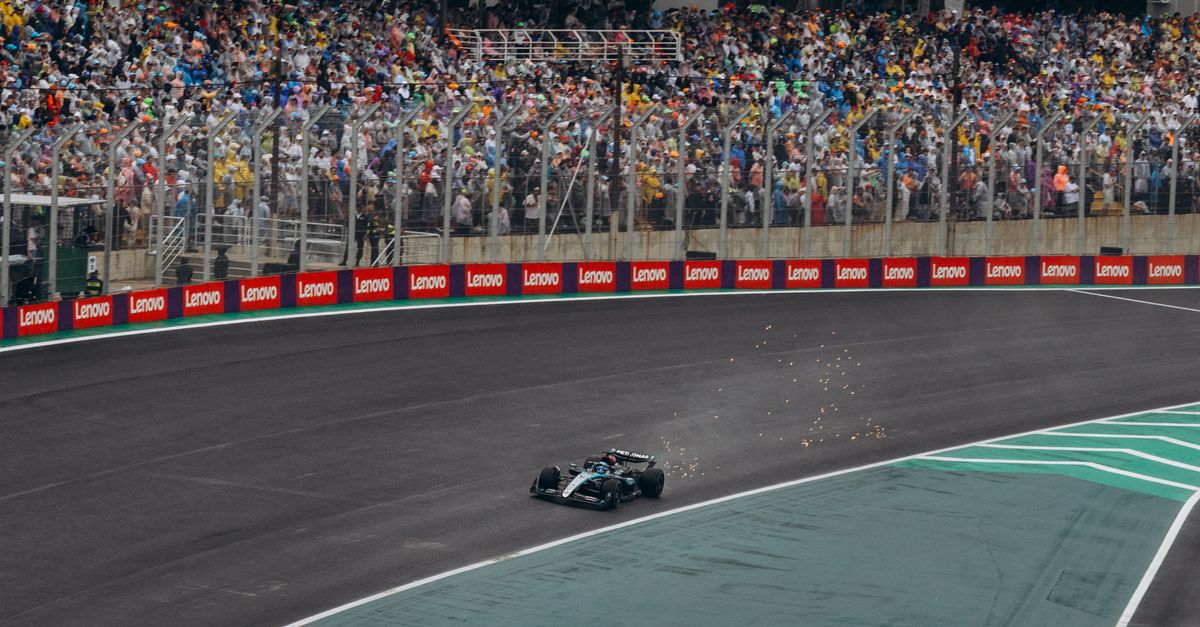
Russell Sets the Pace as F1 Christens the Madring Circuit
There is always a peculiiar tension to a circuit’s first session — no reference points, no received wisdom about where the grip is, and twenty-two drivers simultaneously trying to learn a track while also trying not to be the one who finds the wall first. The Madring delivered exactly that kind of morning. George Russell emerged from the chaos to top the timesheet and lead a Mercedes one-two, but the more instructive story of FP1 was less about who was fastest and more about how untidy the session became once Lewis Hamilton started getting in the way of people.
What Actually Happened
Russell’s benchmark time was the headline, and rightly so — being first to set the marker on a brand-new layout carries a psychological value that outstrips a single Friday morning, since it plants an anchor that every subsequent lap gets measured against for the rest of the weekend. Mercedes will take real encouragement from topping the order with both cars, particularly on a circuit nobody has any historical data for, because it suggests their read of the track — from simulation, from the limited information available beforehand — was sound from the first installation lap.
But the session’s texture was shaped by traffic, not pace. With 20 of the 22 cars venturing out inside the first hundred minutes, the Madring’s debut had all the hallmarks of a circuit still finding its rhythm: drivers hunting for clean air on a track with blind exits and no established braking reference points, engineers barking track-position warnings over the radio, and more than the usual number of aborted or compromised laps. Hamilton was the most conspicuous figure in that mess, reportedly involved in four separate incidents that left rivals frustrated at being baulked mid-lap. On a familiar circuit that kind of pattern would raise eyebrows about focus or car balance; on a new one, some benefit of the doubt is fair, but four incidents in a single session is still a notable outlier even by the forgiving standards of a debut weekend.
Why It Matters
None of this changes the championship picture in isolation — it’s FP1, and FP1 times have a well-earned reputation for meaning very little by Sunday afternoon. But there are three things worth taking seriously from this session beyond the raw lap sheet.
First, Mercedes topping a new circuit’s opening session is a genuine data point about preparation, not just fortune. New tracks reward teams whose simulation tools and correlation work are trustworthy, because there is no historical setup baseline to fall back on — everyone is starting from a blank sheet, and the team that gets the sheet right first often stays ahead of the development curve for the rest of the weekend. Mercedes will want to build on that rather than assume it as a birthright, because low-fuel, low-rubber Friday pace is a poor predictor of race-day competitiveness once the track evolves.
Second, the traffic chaos matters because it is a preview of a genuine safety and sporting concern, not merely a housekeeping footnote. A circuit where the vast majority of the field is on track simultaneously, learning blind corners and braking points for the first time, is a circuit where the margin for error is thin. If FP1 was this congested, it puts pressure on the FIA and the teams to sort out track limits, yellow-flag etiquette and sighting laps before qualifying and the race, when the consequences of a misjudged out-lap are far more costly than a lost lap time.
Third, Hamilton’s afternoon is worth watching not because one bad session defines a driver of his calibre, but because patterns across a weekend tend to say more than any single session. If the four incidents were purely a function of an unfamiliar track and a car still being dialled in, that’s unremarkable and will likely resolve itself by FP2. If it’s symptomatic of something more persistent — a driver-car mismatch on this specific layout, or simply bad luck with traffic — that’s the kind of thread this weekend’s coverage should keep pulling.
The Wider Context
F1’s calendar has leaned hard into new venues in recent years, and the sporting logic is straightforward: street and semi-permanent circuits generate spectacle and commercial interest in markets the sport wants to grow, even if they arrive with the inherent teething problems of unfamiliarity — patchy grip from new asphalt, drainage that hasn’t been tested by a full field of cars, and drivers with no muscle memory for where the limit actually is. The Madring’s debut fits that pattern precisely. It’s also a reminder that “new circuit” sessions are rarely a clean read on pure pace; they’re as much a test of adaptability and preparation as of raw car performance, which is exactly why Mercedes topping the sheet is meaningful even if the lap times themselves should be treated cautiously.
The traffic congestion, too, isn’t unique to Madrid — it echoes the opening sessions at other new-generation venues where limited track knowledge compresses everyone’s out-laps and flying laps into the same narrow windows, because nobody yet knows which parts of the lap can be taken at reduced effort. Circuits typically settle down by qualifying as the field builds a shared understanding of sightlines and reference points; the first practice session is nearly always the messiest one of the weekend by design, not by accident.
GP Headlines’ Take
Russell’s pace and the Mercedes one-two are worth taking at face value as a promising sign of preparation, not a hollow Friday statistic — but nothing more emphatic than that until we see it survive a heavier fuel load and a rubbered-in track. The more significant story from this session is the traffic, and how the sport manages it before qualifying: a new circuit’s first weekend is exactly when race control’s handling of yellow flags and blue flags gets its sternest test, and Hamilton’s crowded morning is a useful early warning rather than a verdict. Come Sunday, this will likely be forgotten as a Friday footnote — but if the congestion repeats itself in a session that actually counts, the Madring’s stewards will have a considerably harder afternoon than its Friday debutants did.