
Antonelli's Championship Lead Takes a Hit With Monza Back-of-Grid Penalty
Examine how a new power unit forcing a grid drop for the championship leader could reshape the title fight at Monza.
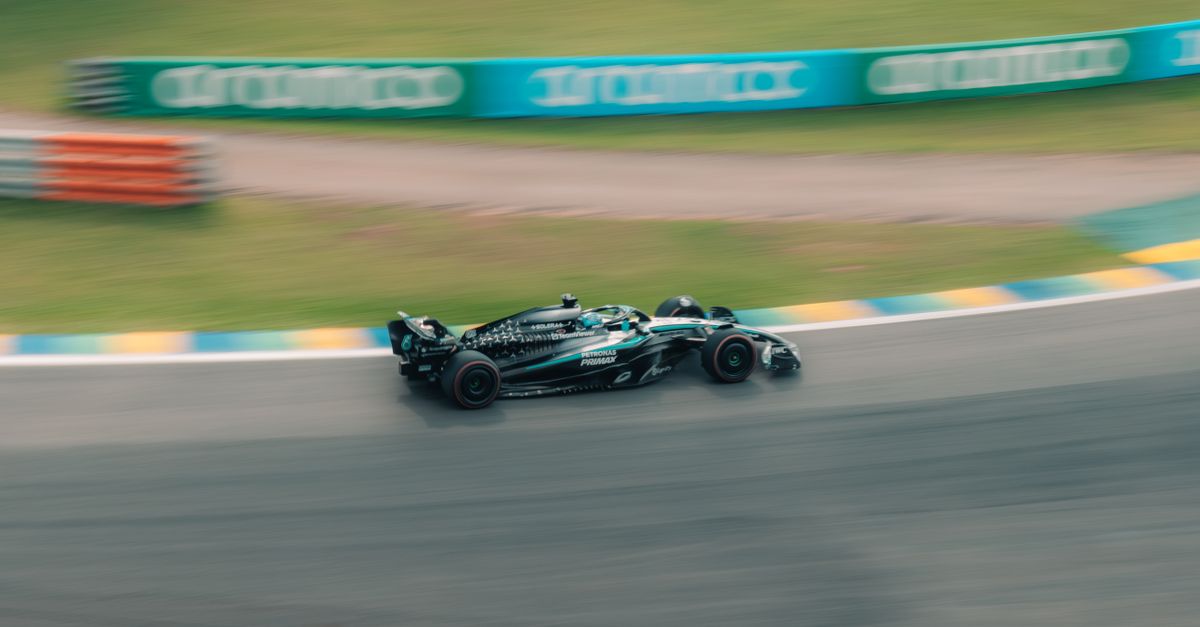
Antonelli’s Championship Lead Takes a Hit With Monza Back-of-Grid Penalty
There is a certain grim irony in a championship leader taking a grid penalty at the one circuit on the calendar where track position matters least and raw pace matters most. Monza, with its cathedral straights and minimal reliance on aerodynamic grip, is traditionally the great leveller for anyone starting further back than they’d like. But a drop to the very back of the grid is a different order of problem altogether, and that is precisely the situation Kimi Antonelli now finds himself in after Mercedes confirmed it will fit a new power unit element that exceeds his allocation for the season. For a rookie leading the standings, it is the first real test of whether that lead has been built on foundations solid enough to survive a bad weekend imposed from outside the cockpit.
What’s Happening
The mechanics of this are straightforward, even if the consequences are not. Formula 1’s power unit regulations allow each driver a fixed number of components per season — internal combustion engine, turbocharger, MGU-H, MGU-K, energy store and control electronics — before grid penalties kick in. Exceed that allocation, even by a single new part, and the penalty is severe: any driver introducing a component beyond their permitted number drops to the back of the grid for that race, regardless of how many elements are actually new or how minor the change might seem on paper.
Mercedes’ decision, then, is not one taken lightly. Teams do not casually dip into a fresh engine allocation at this stage of the season unless they judge it necessary — whether that’s a durability concern flagged by internal monitoring, a performance step they want banked before the season’s remaining rounds, or simply an insurance policy against a unit that has shown signs of degradation. Whatever the specific trigger, the outcome is the same: Antonelli starts Sunday’s Italian Grand Prix from the pit lane or the back row, effectively conceding the best part of 19 grid slots before a wheel is turned in anger.
Why It Matters
Monza is not a forgiving place to stage a recovery drive, but it is more forgiving than most. The long straights down to Turn 1, through Curva Grande and into the Lesmos reward slipstreaming and straight-line speed over qualifying trim downforce, which means a car with genuine pace can, in theory, cut through traffic more effectively here than at a tight, twisty circuit like Monaco or Hungary. That is the one mitigating factor working in Antonelli’s favour. Mercedes’ power unit has generally been considered strong in a straight line this season, and if that continues to hold at Monza, a back-of-grid start is painful but not necessarily fatal to his weekend.
What it does guarantee, though, is risk. A grid full of cars means more contact, more safety car and Virtual Safety Car interruptions to navigate, and more strategic variables that a driver starting from pole or the front row simply doesn’t have to think about. For a rookie in his first title-challenging campaign, threading through the pack at a circuit where speeds are at their highest all season is a very different proposition to doing it at a lower-speed track with more overtaking zones and slower closing speeds. The margin for error shrinks considerably, and the championship stakes mean any misjudgement — his own or another driver’s — carries outsized consequences.
There is also the points equation to consider. Even a strong recovery drive from the back at Monza is unlikely to yield a podium; realistically, Antonelli will be competing to salvage points rather than fight at the front. That immediately hands his championship rivals an opportunity to close a gap that, until this weekend, he had been building through consistent, mature performances rather than any single standout result.
The Wider Context
Grid penalties for power unit changes have become a recurring feature of the turbo-hybrid era, and they have shaped title fights before. What makes this one notable is the timing and the target. Penalties usually land on midfield runners or those already out of championship contention, where the cost is measured in lost points rather than lost momentum in a title race. Applying one to the championship leader, at Monza of all places — a low-downforce, high-speed circuit where straight-line performance genuinely matters — suggests Mercedes judged the reliability or performance risk of persisting with the existing unit to be greater than the cost of the penalty itself. That is a calculation teams make dozens of times a season, but rarely with a title leader’s next result hanging in the balance.
It is also a reminder that engine allocation management is as much a part of a championship campaign as pace and strategy. Teams plan power unit cycles across a season with an eye on exactly these moments — trying to time necessary changes for circuits where the penalty’s impact is minimised. Monza’s overtaking-friendly characteristics make it a more logical place to absorb this hit than, say, Singapore or Zandvoort, and that is presumably part of Mercedes’ thinking even if the optics of a leader starting from the back remain uncomfortable.
GP Headlines’ Take
This is a setback, not a crisis. Antonelli’s title credentials have been built race by race rather than on a single flattering result, and one enforced bad weekend — even at a track where recovery is genuinely possible — doesn’t undo that body of work. But it does inject fresh jeopardy into a championship that had looked to be settling into a rhythm, and it hands his rivals a free swing at the gap. How much ground he loses on Sunday will depend less on Mercedes’ pace, which has looked competitive, and more on how cleanly he can execute a recovery drive under the kind of pressure a rookie leading the standings hasn’t yet faced. The next 53 laps will tell us as much about Antonelli’s title credentials as anything he’s done so far this season.