
McLaren's Engine Envy: Is a Mercedes Power Unit Switch Really on the Cards?
Explores McLaren's growing frustration as a Mercedes customer team and the implications of a potential future switch hinted at by Norris.
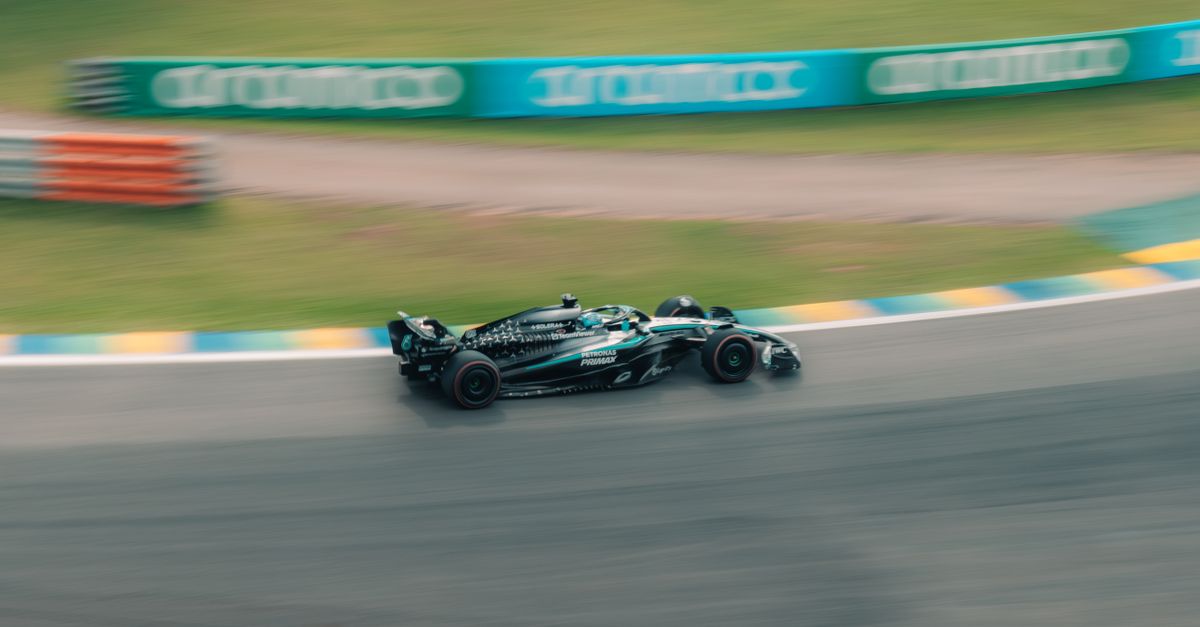
McLaren’s Engine Envy: Is a Mercedes Power Unit Switch Really on the Cards?
There is a particular irony in McLaren, of all teams, being reported as “privately frustrated” with a customer power unit arrangement. This is the outfit that spent the better part of the 2010s learning, painfully, what happens when a works engine partnership goes wrong — first with Honda, then in a fractious final stretch with Mercedes before the current deal was smoothed over. Now, with Andrea Stella’s team back at the front of the grid and genuinely competing for championships, whispers of discontent over its Mercedes power units — and a Lando Norris comment that has been read as a tease of a future switch — deserve careful unpacking rather than breathless amplification.
What’s Actually Being Reported
The substance of the story, as it stands, is modest: reporting suggests McLaren harbours some private frustration with Mercedes as its engine supplier, and that Norris has said something interpreted as hinting at a possible switch down the line. There is no confirmed deal, no announced timeline, and no detail on what specifically has irritated McLaren about the power unit side of its Mercedes relationship. That matters, because in the absence of hard specifics — is this about raw performance deficit, deployment strategy, reliability, cost, or simply the strategic discomfort of relying on a title rival for your most fundamental component — it is easy to over-read a single quote into a narrative of imminent divorce.
What we can say with confidence is that the framing itself is revealing. McLaren does not need to manufacture storylines about its power unit supplier while locked in a genuine title fight; if anything, stability is usually the preferred public posture in the middle of a campaign. That a frustration has surfaced at all, even in muted, unofficial form, suggests something has been simmering beneath the surface of what has otherwise been presented as a productive, harmonious partnership.
Why This Matters Beyond the Gossip
The stakes here are structural, not cosmetic. A Formula 1 power unit is not an interchangeable component like a gearbox casing or a set of dampers; under the current regulations it is the single most consequential piece of engineering on the car, dictating packaging, cooling architecture, weight distribution and ultimately a huge proportion of lap time. A team’s relationship with its engine supplier shapes its championship ceiling for years at a time, which is precisely why McLaren’s late-2010s Honda saga was so damaging — it cost the team the better part of a decade in competitiveness while Mercedes and Ferrari-powered rivals moved on.
Being a Mercedes customer has clear upsides: access to a power unit built by one of the two or three best engine departments on the grid, without carrying the enormous cost and technical risk of designing and manufacturing it in-house. But customer status also carries structural disadvantages. Works teams typically get first sight of updates, tighter integration between chassis and power unit design, and — crucially — no obligation to hand over intellectual property or performance data to a title rival. McLaren, fighting Mercedes’ own works team for wins and potentially championships, is in the unusual and uncomfortable position of needing its engine supplier to keep giving it its best equipment while that supplier’s own team is trying to beat it on track. That tension is not new in F1, but it becomes far sharper the closer the customer gets to genuinely threatening the works outfit.
The Wider Context: 2026 and the Regulatory Reset
This story cannot be read in isolation from the sport’s looming power unit regulation change. The 2026 rules represent the most significant power unit overhaul in over a decade, with a substantially greater electrical contribution, simplified MGU-H removal, and new sustainable fuel requirements. Every manufacturer is effectively starting from a fresh sheet of paper, and that reset is historically the moment when the competitive order between manufacturers gets reshuffled — Honda’s early hybrid-era struggles and Mercedes’ own dominant head start in 2014 are the clearest precedents.
For a customer team, the timing of any supplier decision around a regulation reset is uniquely important, because switching power unit partners is far easier to justify and execute when everyone is starting from zero than mid-cycle, when a change would mean adopting a partner’s several-years-deep development trajectory from a standing start. If McLaren has any genuine appetite to explore alternatives, the run-up to 2026 is the logical and lowest-risk window to do so — which is exactly why any hint of frustration surfacing now, rather than at a random point in an existing regulation cycle, carries more weight than it otherwise might.
GP Headlines’ Take
Treat this story as smoke rather than confirmed fire, but don’t dismiss it either. McLaren has every competitive incentive to want more leverage over its own destiny, and there is an obvious, uncomfortable asymmetry in a title-contending customer team depending on a title-contending manufacturer for its most critical component. Norris’s comments, whatever their precise content, are the kind of thing a driver says when a team is quietly weighing its options rather than actively executing a switch — and there is a meaningful difference between the two.
The realistic likelihood is that this is less about an imminent split and more about McLaren using the 2026 reset as leverage, whether that means negotiating harder within the existing Mercedes relationship or genuinely scouting alternatives such as a return to independence or a switch to another manufacturer. Given the scale of what’s riding on getting the next power unit generation right, McLaren would be negligent not to at least explore every option. Whether that translates into an actual change of supplier is a different question entirely, and one this story, as reported, simply doesn’t answer yet.