
How Aston Martin's Sudden Form Surge Is Forcing Rivals to Recalculate
Aston Martin's Hungary upgrade has alarmed rivals like Haas and Williams while giving Alonso a scare of his own in Q1.
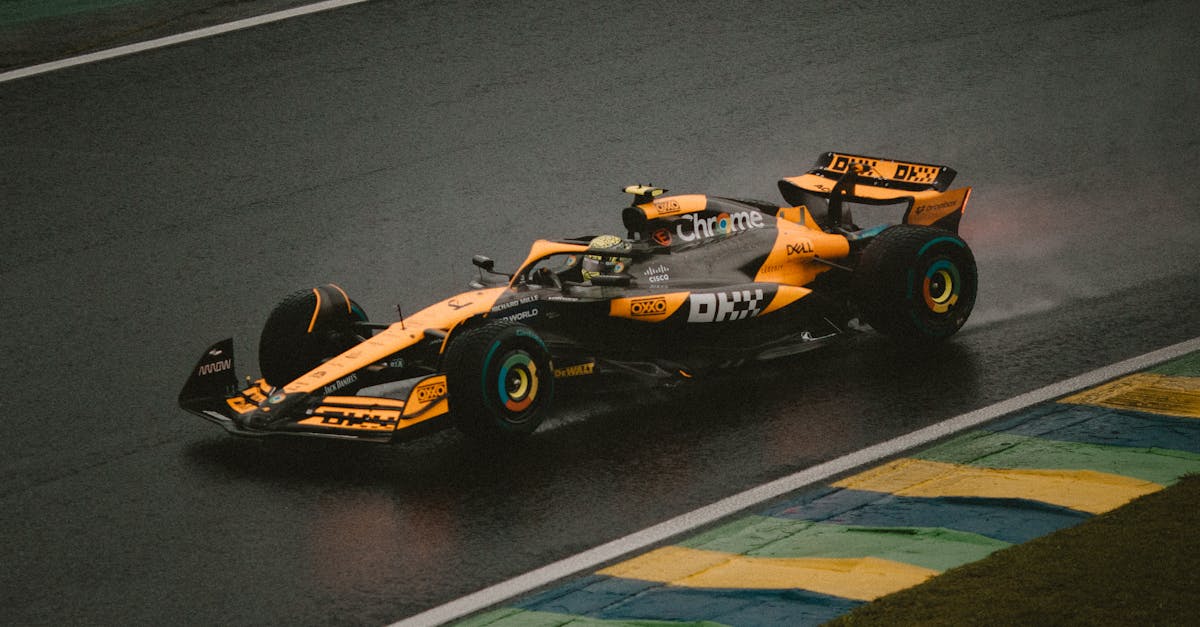
Aston Martin arrived in Budapest as a team that had spent the first half of 2026 quietly reworking its car in the wind tunnel while its results told a rather less flattering story. By Saturday evening, that gap between underlying potential and track performance had closed sharply enough to unsettle a midfield that thought it understood the pecking order. Fernando Alonso nearly missed Q1. Oliver Bearman didn’t. And suddenly teams like Haas and Williams are being forced to ask whether the car they’ve been benchmarking against all season has just moved several places up the grid.
What Actually Happened in Hungary
Aston Martin brought what by all accounts was its most substantial upgrade of the season to the Hungaroring — not a token aero tweak but a package clearly designed around a specific philosophy the team believes it can build on through the remainder of the year. The immediate evidence was in the ledger: a car that had been scrapping around the lower midfield suddenly had the pace to trouble cars it hadn’t seriously threatened in months.
The most telling data point wasn’t Aston Martin’s own lap time, though — it was the reaction of everyone else. Fernando Alonso, a driver not prone to hyperbole about his own machinery, admitted relief at avoiding what he described as a “nasty surprise” by scraping through Q1, his first time doing so all season. That’s a revealing tell. When a two-time world champion with Alonso’s experience of interpreting a car’s true pace is surprised by how close his own team came to an early exit, it tells you the upgrade has moved the car into unfamiliar territory — quick enough to be dangerous, but not yet consistent enough for the team to trust it blindly.
Meanwhile, over at Haas, Oliver Bearman’s own Q1 exit prompted a pointed observation: that Haas “shouldn’t be fighting with” Aston Martin at all. It’s an admission that carries some sting for a team that has spent much of the year believing itself to be in a different, higher bracket. Esteban Ocon’s stronger showing in the sister Haas offered some consolation, but the wider point stands — a team that had regarded Aston Martin as beatable now has to reckon with the possibility that assumption no longer holds.
Why This Matters Beyond One Saturday
Formula 1’s midfield is a zero-sum environment. There is no such thing as a good result in isolation — every point gained by one team is, in effect, a point taken from a direct rival’s championship ambitions. That’s why a single upgrade, deployed at the right moment, can recalibrate an entire section of the grid’s psychology, not just its lap times.
Haas and Williams have both been operating this season on a working assumption about where Aston Martin sits relative to them. Strategy calls, development priorities, even driver instructions in wheel-to-wheel battles are all built on that assumption. If Aston Martin has genuinely found a step change in performance rather than a one-off qualifying spike, then every one of those calculations needs revisiting. Do you commit more resource to your own upgrade path now, accelerating a development arms race you weren’t planning for? Do you accept that a points position you’d budgeted for is no longer guaranteed? These aren’t abstract questions — with the constructors’ championship carrying direct financial consequences via the prize money table, a shift of even a few positions in the midfield has real commercial weight for smaller teams operating on tighter margins than the sport’s front-runners.
Carlos Sainz’s response was notable for its tone. Rather than treating Aston Martin’s turnaround as a threat to be feared, he framed it as a template — evidence that a well-targeted upgrade can transform a season, and therefore reason for Williams to back its own development push rather than be intimidated into caution. It’s the correct competitive instinct: in a sport where car performance is never fixed, the correlating fear taken from a rival’s leap forward should be motivation, not paralysis.
The Caveat Rivals Are Clinging To
Not every observer inside the paddock is convinced this is a settled shift. There’s a school of thought — and it’s a reasonable one — that has already identified a potential weak point in Aston Martin’s recovery: raw single-lap pace over one flying attempt is not the same as race-day consistency across a full stint, in traffic, on varying fuel loads and tyre degradation. Hungary’s characteristics, with its low-speed, high-downforce demands, may also have flattered a package that hasn’t yet proven itself as a genuinely broad-spectrum upgrade capable of working everywhere from Monza to Suzuka.
That distinction matters enormously for how rivals should actually respond. A car that has found a genuine step in downforce efficiency is a long-term threat. A car that has simply found a set-up window that suits one specific circuit is a one-race scare. Aston Martin’s own drivers being surprised by their pace is, in a strange way, evidence for the latter interpretation as much as the former — teams usually know when they’ve made a fundamental breakthrough, and Alonso’s tone suggested something closer to pleasant shock than quiet confirmation of expectations.
GP Headlines’ Take
The measured view is that Aston Martin has earned the right to be taken seriously again, but not yet the right to be assumed as a fixture in this new position. Hungary was a genuine data point, not noise — the reactions from Alonso, Bearman and Sainz all independently corroborate that something real changed. But one weekend, on one circuit, with question marks already raised over sustainability, isn’t enough to rewrite the midfield order permanently.
What it should do, and what Sainz’s comments rightly capture, is inject urgency into Williams and Haas’s own programmes. The teams that treat this as a wake-up call rather than a curiosity will be the ones best placed if Aston Martin’s step forward proves durable. Complacency, in this part of the grid, is punished quickly — and Budapest was as clear a warning shot as the midfield has seen all year.