
Is George Russell's Mercedes Future Already Slipping Away?
Examining whether Russell's post-Spa struggles and tension with Wolff signal a deeper rift that could push him toward an exit.
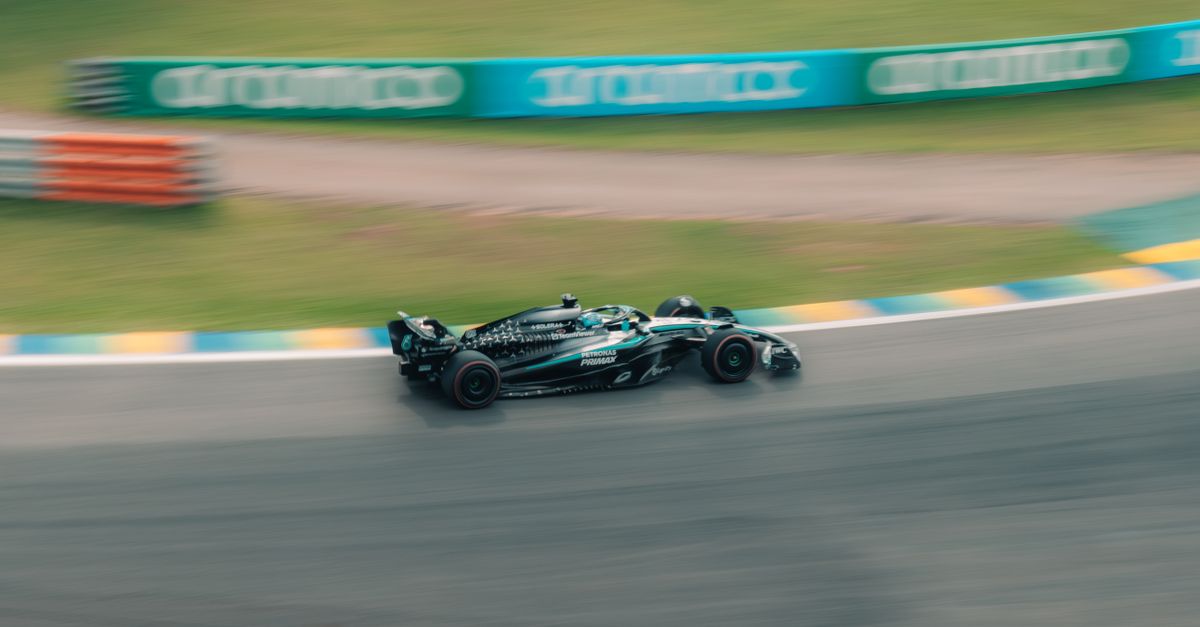
Is George Russell’s Mercedes Future Already Slipping Away?
There is a particular kind of quiet that descends on a driver after a run of results like the one George Russell is currently enduring — not the silence of a man out of contention, but of one who knows exactly how much is riding on the next few races. Russell described himself as “numb to the disappointment” after his lap-one retirement at Spa-Francorchamps, and that phrase alone tells you more about where his season sits psychologically than any stint of post-race punditry could. When a driver of his calibre starts reaching for numbness rather than frustration, it usually means the frustration has been there for a while.
What’s Actually Happening
Strip away the noise and the situation is fairly simple: Russell has hit a form slump at the same moment Mercedes’ car appears to have lost whatever fragile competitive window it had earlier in the year, and the two problems are compounding each other in public view. Spa was the low point — a first-lap retirement that denied him any chance to salvage points from a weekend already compromised by machinery that wasn’t quite there. Sky Sports F1’s framing of it as a “knockout blow” was pointed, but not unreasonable; retirements at this stage of a contract year carry weight beyond the points column.
What’s more revealing, though, is Toto Wolff’s reaction to the scrutiny itself. Accusing a Sky Sports presenter of “finger pointing” during a question about Russell is not the response of a team principal who feels entirely comfortable with the narrative forming around his driver and his car. Wolff is not a man prone to thin skin in front of cameras — he’s built a reputation on bluntness, often at his own team’s expense. That he pushed back so visibly suggests the question landed somewhere sensitive, whether that’s the car’s competitiveness, Russell’s mental state, or the unresolved matter of his 2026 seat.
Why It Matters
Context is everything here. Russell is out of contract at the end of this season, and Mercedes have been conspicuously unhurried in tying him down, all while the paddock’s most consequential young talent, Kimi Antonelli, sits alongside him on a long-term development trajectory that Wolff has invested heavily in — both technically and reputationally. Add Max Verstappen’s continually rumoured availability, a subplot that refuses to die regardless of how many times Red Bull insist otherwise, and Russell’s negotiating position looks considerably less commanding than his results over the past eighteen months would suggest it should.
This is the uncomfortable truth of modern F1 driver management: form and timing matter more than career achievement. Russell has a maiden win, pole positions, and a body of work that marks him clearly as one of the grid’s better operators. But a slump arriving precisely when contract talks should be crystallising is corrosive, not because it erases what came before, but because it hands leverage to a team that already had other options on the table. Mercedes don’t need to say a word publicly for Russell to feel that pressure — the mere existence of Antonelli’s development runway and Verstappen’s perpetual availability does the talking.
The Wider Context
Mercedes’ 2025 car has been a mixed bag all season — capable of flashes of genuine pace, particularly in cooler conditions or on tracks that suit its characteristics, but inconsistent enough that neither driver has been able to build sustained momentum. That inconsistency matters more for Russell than for Antonelli, whose rookie campaign is being judged on a longer curve with far more forgiving expectations. Russell doesn’t have that luxury. Every underwhelming weekend is read not as development, but as evidence for or against a contract decision.
It’s also worth remembering how quickly narratives can shift in this sport. Twelve months ago, Russell was arguably Mercedes’ most complete driver — mature, quick, media-savvy, and increasingly viewed as the senior figure in the garage post-Hamilton. That reputation doesn’t evaporate over a handful of bad weekends, but F1’s news cycle doesn’t deal in patience. A slump combined with contract uncertainty becomes, almost overnight, a referendum on a driver’s entire standing — hence GPfans’ framing of Russell risking becoming F1’s “forgotten man,” which, while dramatic, isn’t entirely detached from how quickly perception can calcify in this sport when timing conspires against a driver.
GP Headlines’ Take
None of this means Russell’s Mercedes career is finished, and it would be premature to read a lap-one retirement and a testy press conference exchange as proof of an irreparable rift. Wolff’s defensiveness could just as easily reflect protectiveness of a driver he rates highly as it could underlying doubt. Team principals bristle at pointed questions about their drivers all the time; it doesn’t automatically signal internal crisis.
But the broader picture is harder to dismiss. Russell is negotiating his next chapter at the exact moment his stock has dipped, inside a team that has both a highly-rated junior on the books and one eye permanently on the driver market’s biggest name. That combination doesn’t require any dramatic falling-out to be dangerous for Russell — it simply requires Mercedes to conclude that the timing favours a change, and for results over the coming races to do nothing to argue otherwise.
The next several grands prix, then, matter disproportionately. Not because one bad weekend defines a career, but because in a contract year, form is currency — and right now, Russell’s account is looking thinner than it did in the spring.